ABSTRACTION AND PRESENCE OF THE WORLD IN ENDRE ROZSDA
March 1, 2015
Abstraction and Presence of the World in Endre Rozsda, by Claude Luca Georges, published in Mélusine numérique journal n°1
Endre Rozsda occupies a singular place among twentieth-century painters. He loved the two most audacious and most distant paths of Modernity, abstraction and surrealism, but without resigning himself to their divorce; solitary, he sought to make them live together. This duality of desire oriented his work toward a reconciliation of the beyond-meaning and meaning that announces the current quest for a painting appearing, successively, abstract, then evocative or even figurative. To achieve the manner in which his two desires for painting converged, it took him a quarter of a century, which was rich in remarkable creations where various influences are felt. His first great period, from the early thirties to 1943, led him, through greater freedom in the treatment of the subject, to the doors of abstraction (originally from Mohács, he lived in Budapest until 1938, then resided in Paris). Budapest where he took refuge in 1943, became for him, between 1945 and 1948, the place of a great opening to surrealism, and this all the more so since there was the determining influence of Marcel Jean, a major actor of the surrealist movement in France, then in Budapest where he settled to create fabric patterns in a textile company. With surrealism, Endre Rozsda penetrated into the world
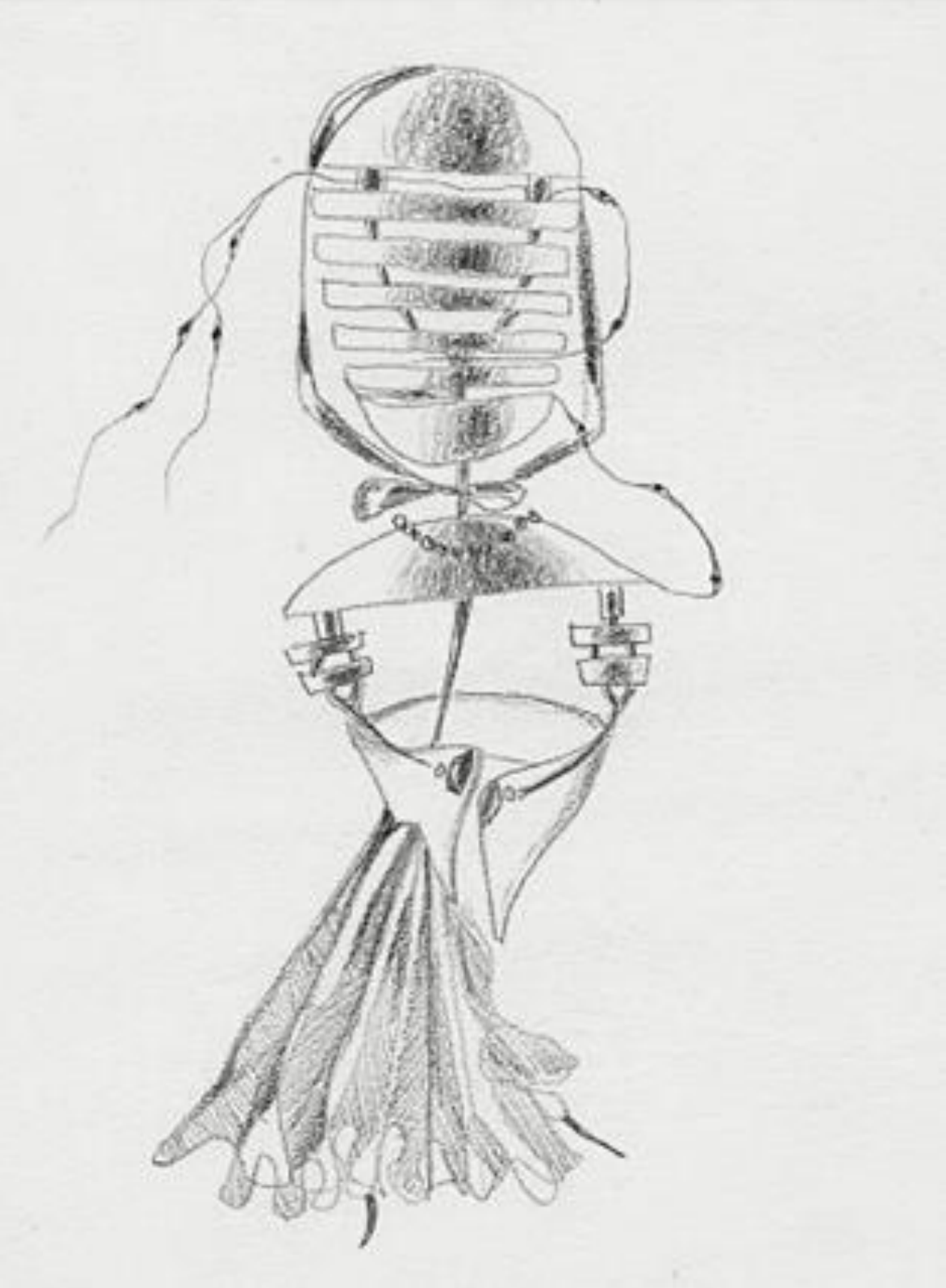
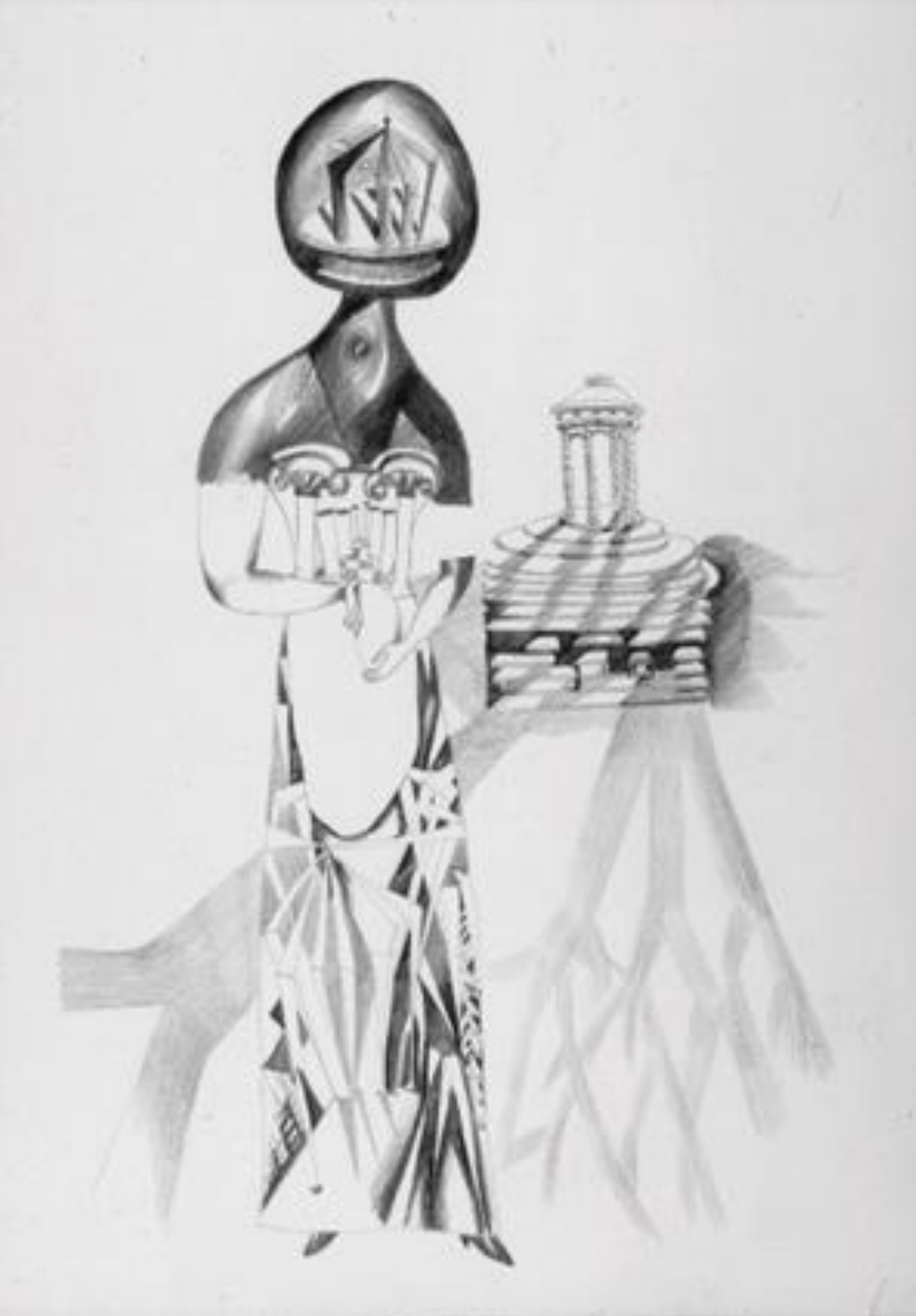
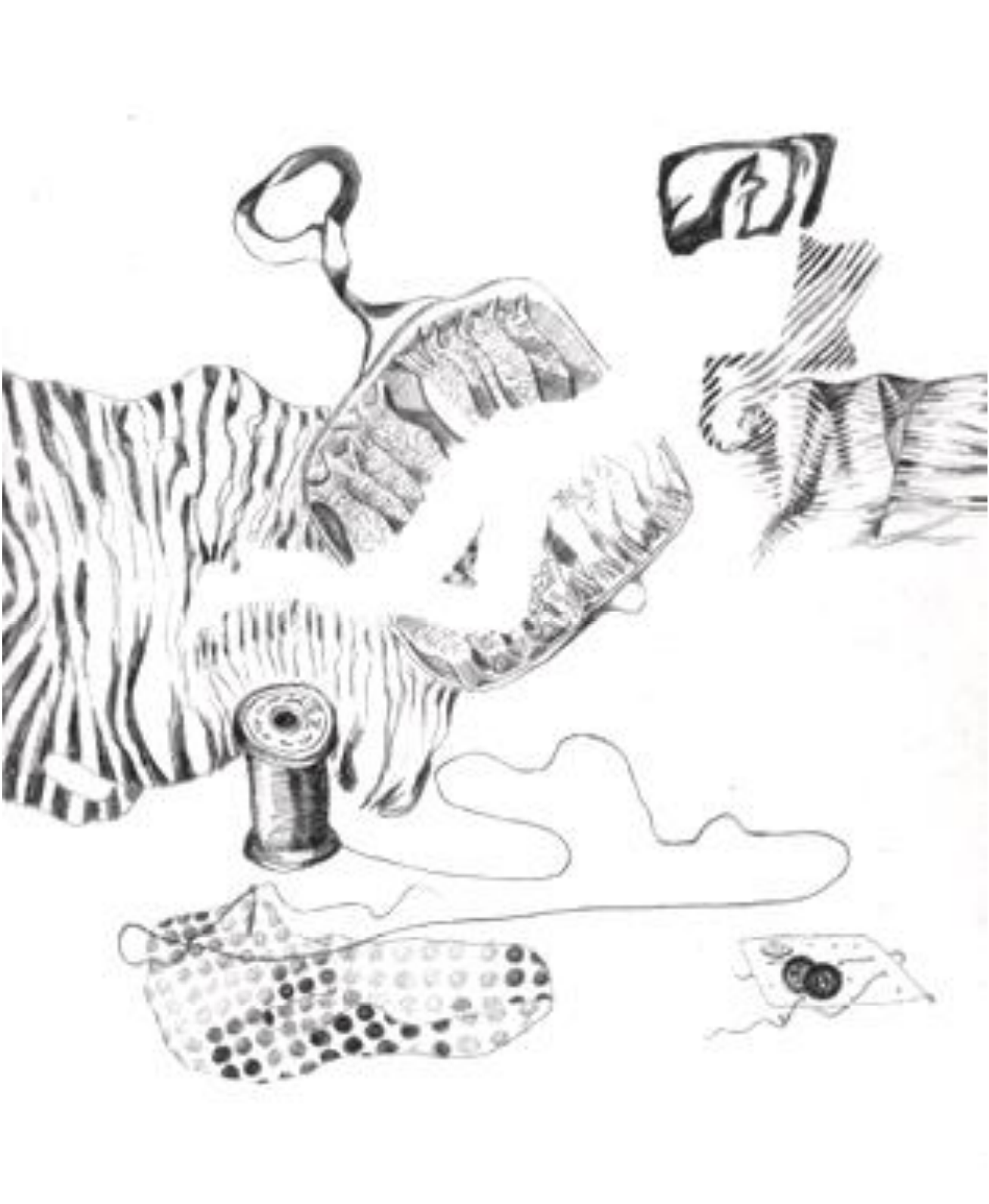
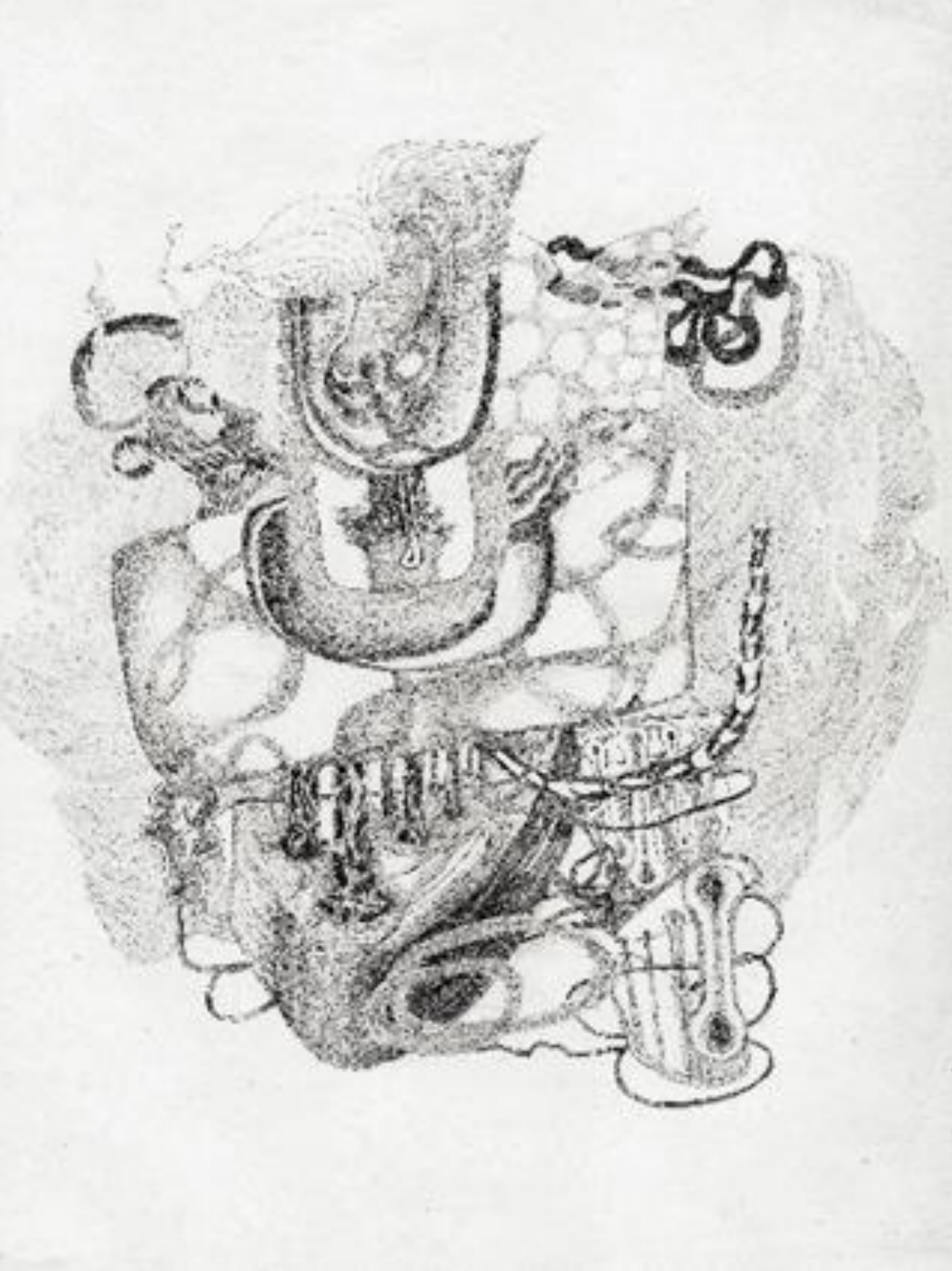
of metamorphoses where, as Françoise Py says: "the image, born from the bringing together of two realities as distant as possible, acquires a power of alchemical transmutation"(1). In the drawings, one first saw figures integrating elements that are foreign to them. Then there were amalgams of figures. The paintings of this era are not really marked by metamorphosis. They rather evoke the bio-romanticism theorized by Ernő Kállai, as well as automatic surrealism.
If one can qualify the period 1948-56 as a white period, because it is without paintings, creation being muzzled by Soviet power, it was doubtless for Endre Rozsda that of the major advance, that where he managed to conceive the manner in which we see abstraction and a certain presence of the world meet. Otherwise, how to account, indeed, for the fact that the first works, created in Paris in 1958, shortly after his return in 1957, immediately presented the major characteristics that would then mark the entire work through its evolution? These works arouse two successive visions. The first, abstract, is followed by a second look in which appears a flowering of details where figuration, sometimes precise, sometimes vague and evocative, arouses the fugitive impressions of a certain presence of the world. The graphic elements remain well present, but they no longer determine the structure of the work. They are found as embedded in a harmonic ensemble where is swarmed a profuse multiplicity of small elements with geometric dominance. From the 70s onwards, the abstract structure will become more pregnant, especially thanks to the accentuation of color effects. It is probable that this evolution was notably influenced by the brief stay in New York in 69. Endre Rozsda said he was then very struck by the all over of Jackson Pollock and Mark Tobey. If the first vision of Endre Rozsda's paintings seems to escape interpretation, it is, it seems to me, due to the fact that the geometric forms, both small in size and very numerous, create a very dense network of correspondences between formal aspects and colored aspects. Harmonic cohesion thus supplants the vision of the elements that give birth to it. It imposes itself with a quasi-musical presence that excludes the register of meaning. One cannot therefore attach this initial vision to surrealism. It is situated outside the field of what has been called surrealist abstraction. And yet... before a Rozsda, the eye, first seized by the overall harmony, in a global vision whose enjoyment ignores curiosity, will then tend to focus, attracted by aspects that introduce an interrogative vision in search of the identifiable: patterns, scatterings of small spots, bundles of streaks, crosshatchings, series of small closed forms among which often more or less ovoid elements, etc. These signs, favoring interpretation, will project the mind onto less evocative elements. In this focused vision, details like those that one will be able to see hereafter often become veritable paintings.
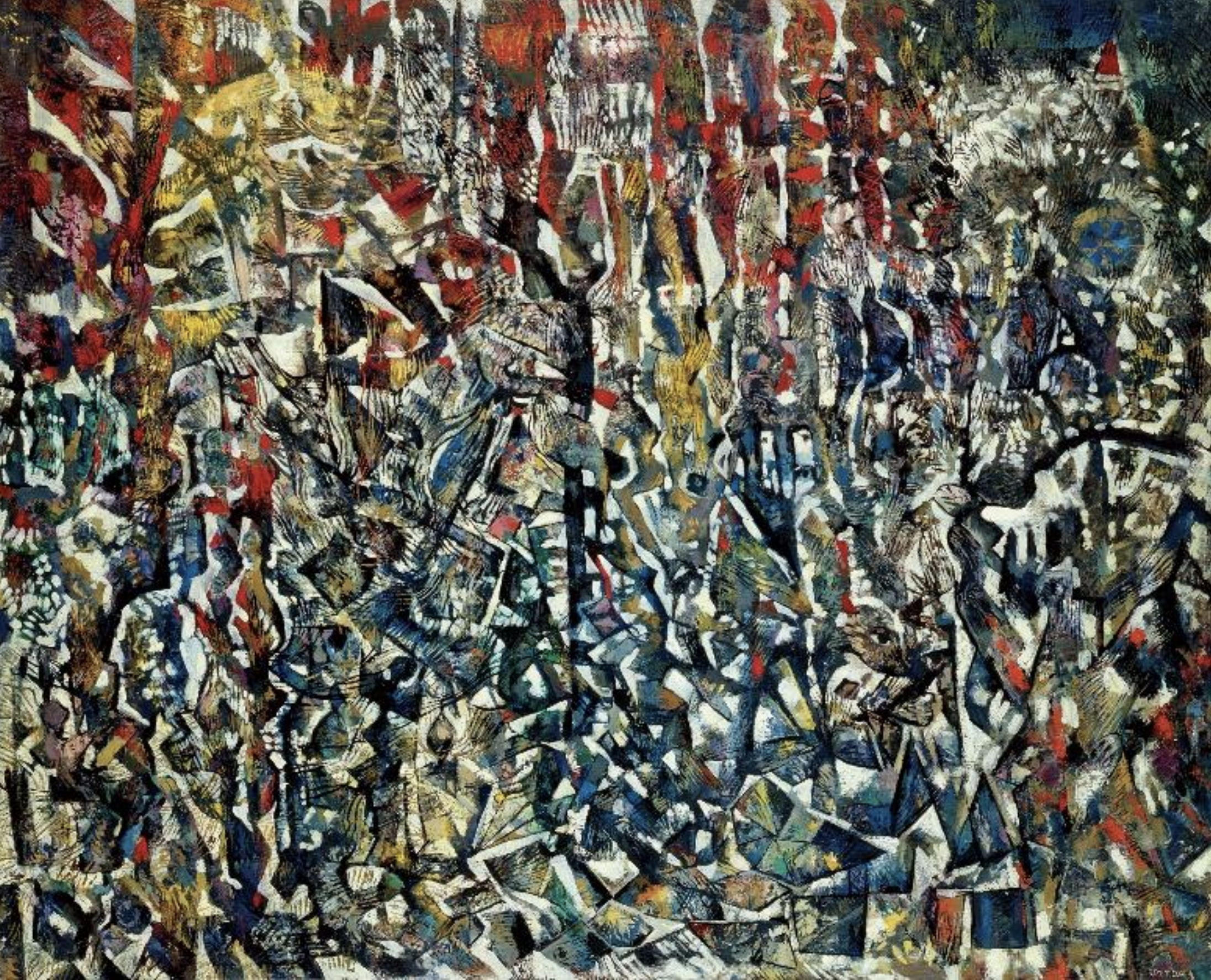
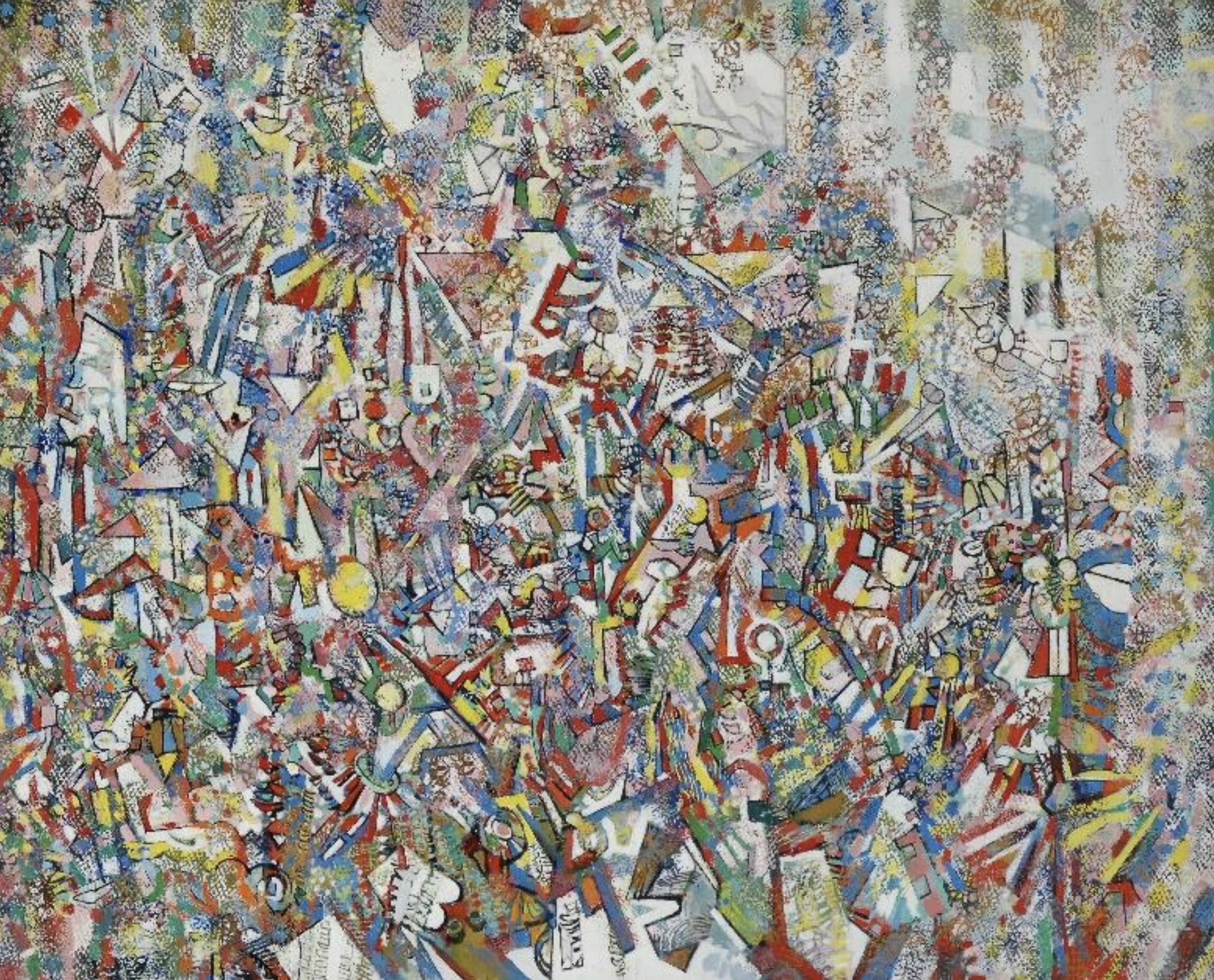
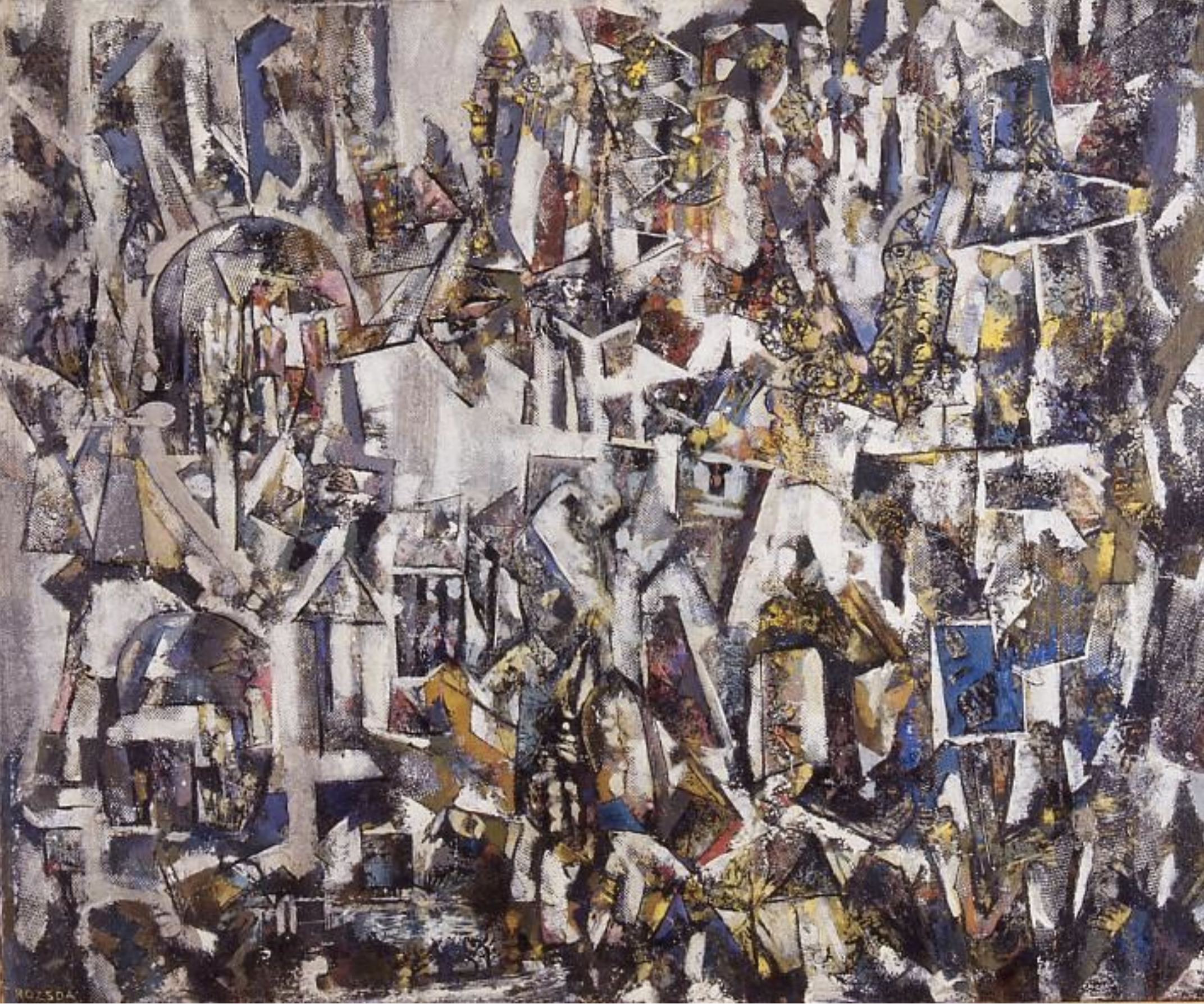
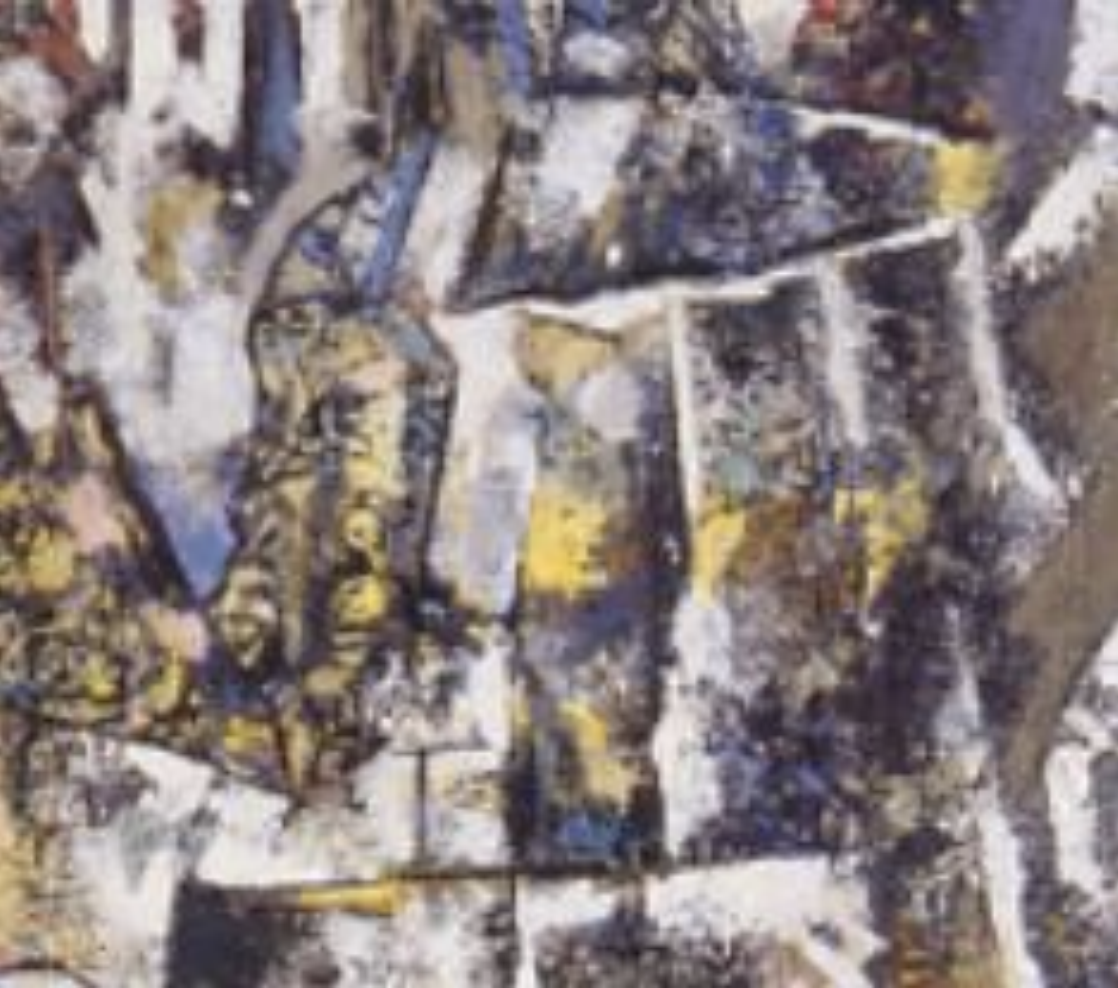
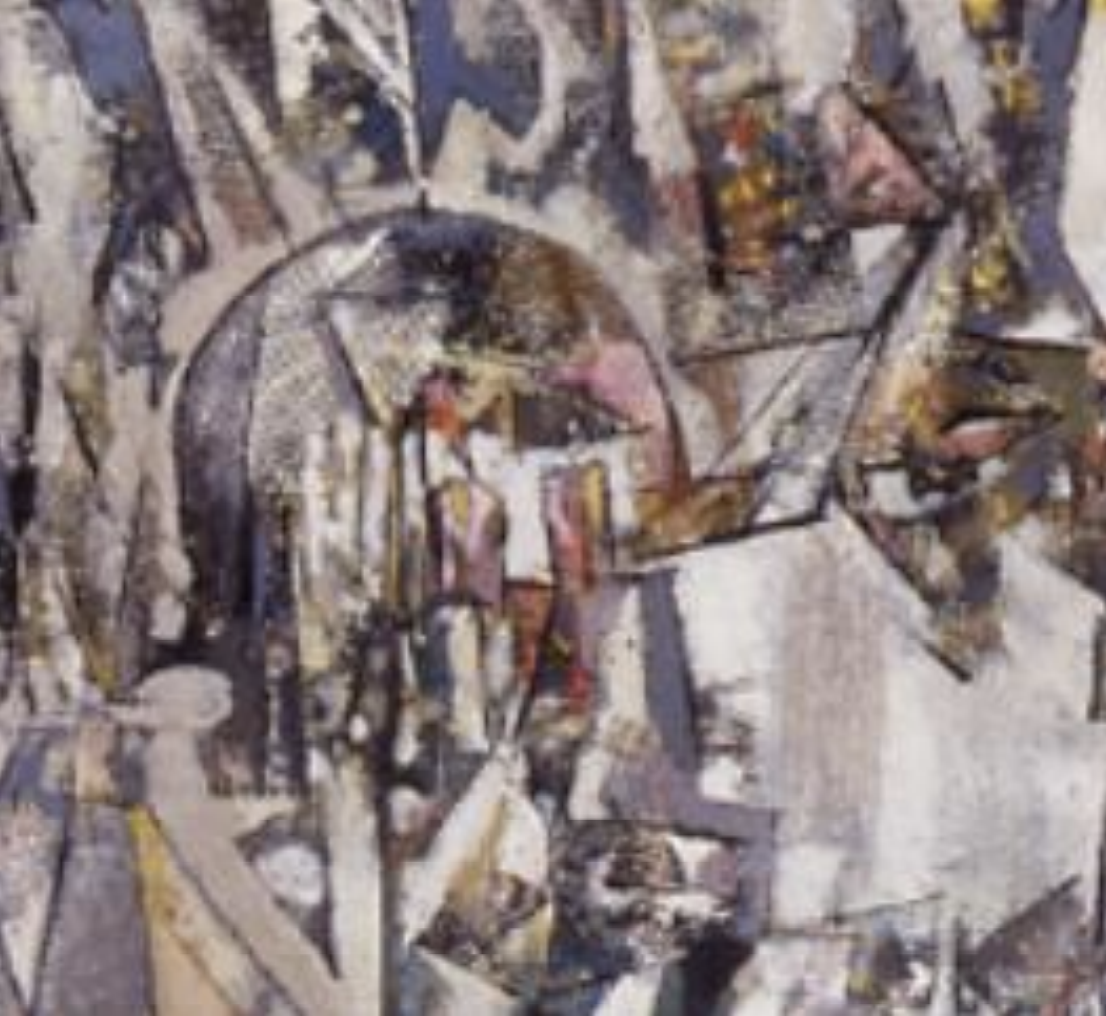
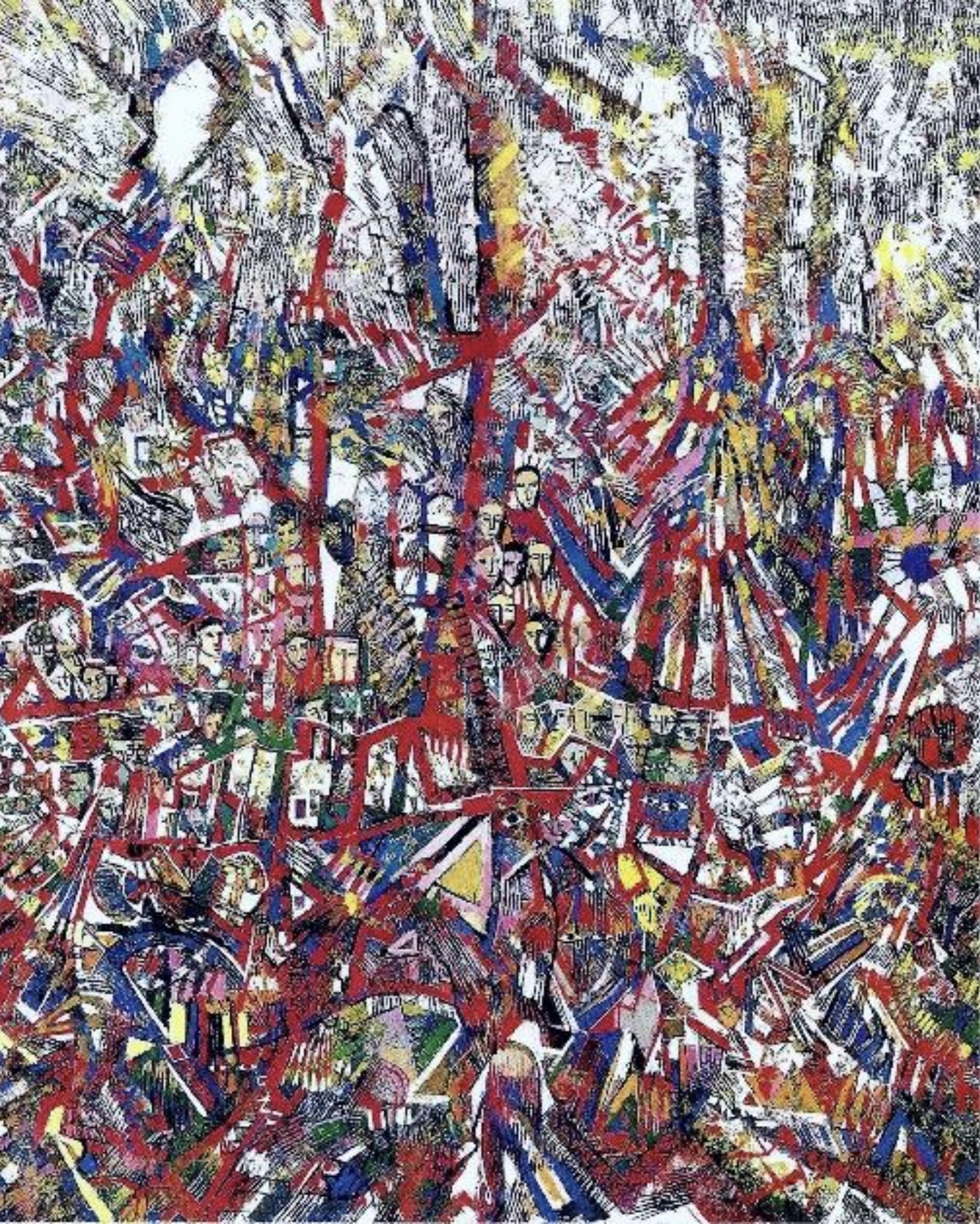
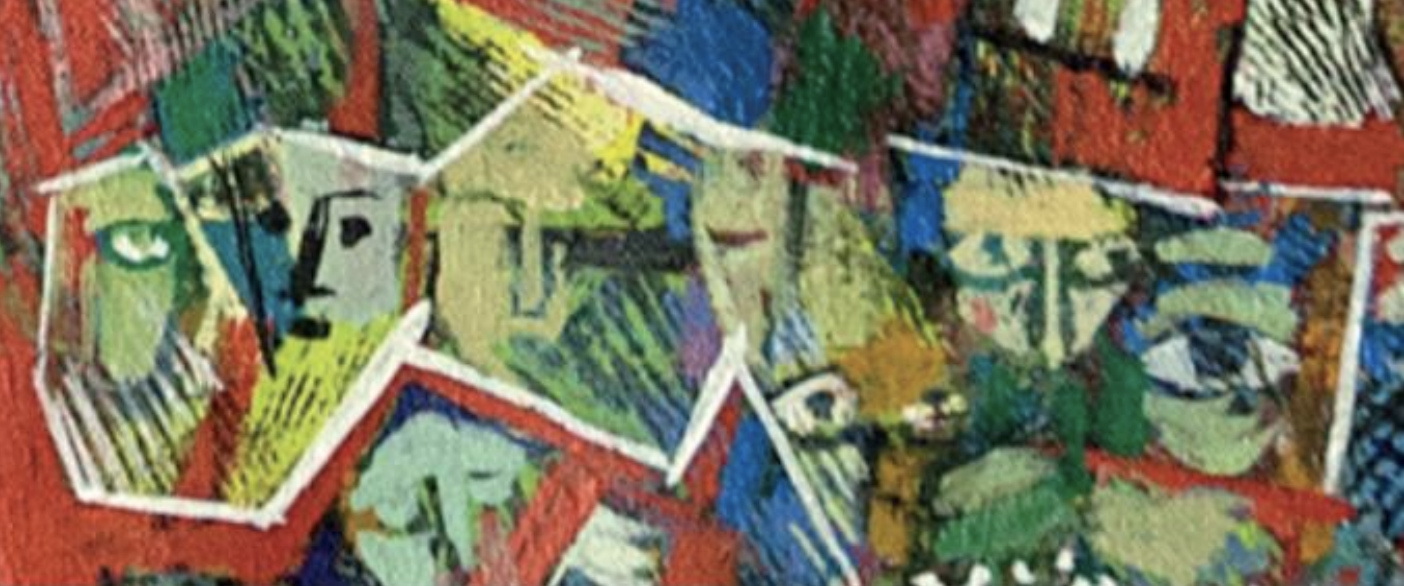
In the beginnings of maturity, the aspects arousing the second vision are especially graphic. They come from drawing. Then, progressively, more pictorial aspects from their mutation are mixed with them. One can also encounter clearly figurative aspects. It is thus that Endre Rozsda makes of a painting a poetic journey among multiple paintings. One cannot say it better than Joyce Mansour:
_A painting by Rozsda, that makes one think of the extravagant waste of the autumn forest, of apple trees in bloom after the death of the sun, of ocular gold, malleable and motionless, fresh from the songs of the land of the Magyars, of the fauve melody of carts that pass and repass in the half-sun without losing a single star twig, ....
Does this painting not participate in surrealism through its second vision? Not so much by the multiplication of paintings within the painting, as by the plurality of evocations that arise from each of the glimpses, such aspect being able to transport us successively into a childhood garden, a fairground or among the vivid colors of a summer beach? Endre Rozsda's work appears to us today in a new perspective. By allying, thanks to a duality of vision, abstraction and metamorphosis, it opens onto the present time, a time that is no longer to the confrontations that tore apart Modernity but to the search for confluences, a time where many love Jackson Pollock and Pierre Soulages as much as Marcel Duchamp or Louise Bourgeois.
- Françoise Py, "Surrealism and Metamorphoses: For a Modern Mythology", Mélusine n° XXVI, "Metamorphoses", Lausanne, L'Age d'Homme, 2006, p. 10.