"MEXICO REVISITED", MÉLUSINE N° XIX, 1999, PP. 9-21.
Read: the poetic works of Octavio Paz...
Echoes, Extensions:
Read: Jeu de paume, 2012: Olivia Speer: The Surrealists' Initiation Journey to Mexico
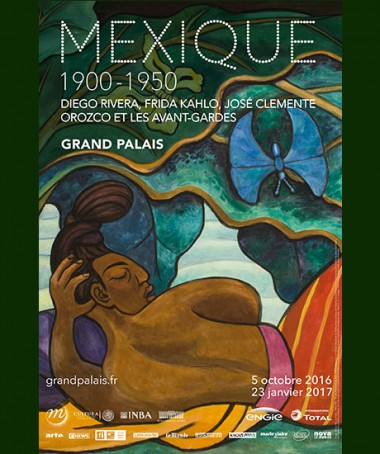
Exhibition at the Grand Palais, Paris, 2017
In the 1940s, Mexico became a privileged destination for European artists seeking to flee the political persecutions that were then striking Europe.
Most of them would stay there during the Second World War: Wolfgang Paalen, Alice Rahon, Eva Sulzer, Kati and José Horna, Juan Larrea, Benjamin Péret, Remedios Varo, Leonora Carrington, Luis Buñuel... The cradle of pre-Hispanic civilizations becomes a mythical homeland for the surrealists who went there in the hope of a revelation. However, the Mexicans will not constitute a true surrealist group.
The exotic appeal of Mexico and the artistic perspectives offered by the country do not escape Antonin Artaud and André Breton during their stay in Mexico a few years earlier. They find there a place conducive to the pursuit of surrealist work. In 1940, the International Surrealism Exhibition is organized at the Mexican Art Gallery: works by European surrealists rub shoulders with pre-Hispanic pieces and works by Mexican artists of the time, composing, according to some specialists, an ensemble too heterogeneous to be coherent. This mixture of aesthetic values nevertheless constitutes a source of inspiration for artists, who do not hesitate to hybridize original concepts and incorporate elements of pre-Columbian art and cultures from other latitudes. Hybridization that makes them converge towards surrealist language, but reinterpreted according to their own Mexican culture.
Summary: The ruptures of the Second World War and the political upheavals of the second half of the 20th century led European artists, through different paths and for different reasons, to exile themselves to Mexico. From Benjamin Péret to Leonora Carrington, through Luis Buñuel or César Moro, they have in common personal and aesthetic links with the surrealist movement. The study of their creations and their correspondences allows us to identify the constellation of artists of a "displaced surrealism" that renews its forms and subjects through the tear of exile.
See Las Pozas, Edward James' Garden
I refrain from citing all the texts relating to Frida Kahlo, as well as the exhibitions and films to which she gave rise...