"THE QUESTION OF SURREALIST THEATER OR THEATER IN QUESTION", EUROPE, NO. 475-476, NOVEMBER-DECEMBER 1968, P. 176 SQ. DECEMBER 30, 2023 HENRI BÉHAR
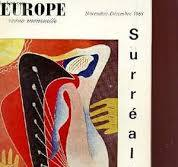
Dossier devoted to surrealism:
definition, context and history of the movement,
with the testimony of Philippe SOUPAULT ("Origins and beginnings of Surrealism")
texts
Maurice BOUVIER-AJAM ("Realism of surrealist time")
Jacques GAUCHERON ("Surrealism dead or not dead")
Raymond JEAN on "surrealist eros" ("The great force is desire")
Roger NAVARRI on the political visions of surrealists ("The surrealists, the writer and the Revolution")
reflections on the literary importance of the movement by Franz HELLENS ("Surrealism saved everything") and Rolland PIERRE ("Points of view and questions"), "Surrealism and its chances of survival" by Georges DUPEYRON, "Black humor and surrealism" by Lucienne ROCHON;
then texts devoted to various writers: Lautréamont by Lucienne ROCHON, Pierre Reverdy by Charles BACHAT, Pierre Albert-Birot by Arlette ALBERT-BIROT, "Breton, Jung and objective chance" by Paule PLOUVIER, "Goll and Breton" by Claire GOLL, followed by the facsimile (16 pages) of her magazine "Surréalisme" from 1924 (texts by Pierre ALBERT-BIROT, Guillaume APOLLINAIRE, Pierre REVERDY, Joseph DELTEIL, Marcel ARLAND, René CREVEL, etc.) and texts by Yvan GOLL;
texts on surrealism and the arts: Max Ernst collages by Carlo SARLA, cinema by Pierre AJAME and René GARDIES, Antonin Artaud by Jean-Gabriel NORDMANN and surrealist theater by Henri BEHAR;
texts on surrealism outside France: Belgium by André BLAVIER, Italy by Ugo PISCOPO and surrealism and futurism in Italy by Noëmi BLUMENKRANZ-ONIMUS, surrealism and Celtic marvelous by Françoise HAN, Yugoslavia by Draguicha VITOCHEVITCH, Spain by Jesus IZCARAY, Paraguay by Pedro GAMARRA DOLDAN, Hispanic-American countries by Danièle MUSACCHIO; "high places" by Albert FOURNIER and chronology (1918-1938) of the movement by Jacques GAUCHERON; 28 off-text photos and facsimiles; 1st cover decorated after "Femmalaharpe", oil by MAN RAY. (R.B.)
Article reprinted in: Henri Béhar, Littéruptures, Lausanne, L'Age d'Homme, 1988, p. 509-74. (see digitized version

This text was requested from me by Pierre Gamarra, director of the Europe magazine, in order to present my Study on Dada and Surrealist Theater, Gallimard, coll. Les Essais, 1967, now out of print, of which I note that it has been digitized, without any agreement, here https://books.openedition.org/pufc/38292?lang=fr
Presentation: It is paradoxical to speak of Dada theater to anyone who knows that this movement rejected any artistic category. Dada was not seeking systematic scandal but participation. The whole problem consists in finding the exact threshold beyond which the spectator, from passive, becomes active, independently of his will, and the means to achieve this. This is what the author deals with in this work by examining the texts which, organized in dialogue, lent themselves most to an explosion of poetry, which, beyond provocation and scandal, remains theater poetry, that is to say collective.
Moreover, how to recognize surrealist light in the theater? Will it be, as for Dada, in the provocation spectacle? It will rather be in a certain way that authors will have to tackle the problems of language head-on, to produce the most arbitrary images. It will also be in the presence or quest for the Marvelous, in the irruption of the powers of the Dream,...
Read the book review
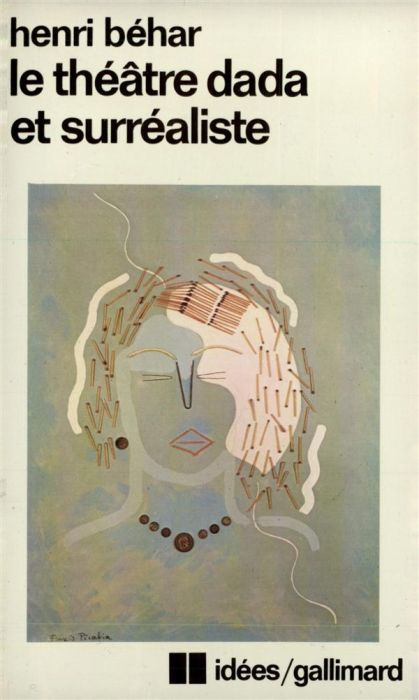
In fact, the initial volume was taken up and updated in pocket format: Dada and Surrealist Theater, Gallimard, coll. Idées, No. 406, 1979.
Extensions: Repertoire of surrealist theater, its upstream, its downstream. By André G. Bourassa
Theater "activity of the mind": text, language and graphics in Dadaist and surrealist theaters, Emmanuel Cohen