"THE DIFFICULT WORDS" IN WORDS IN FREEDOM, MISCELLANIES OFFERED TO MAURICE TOURNIER, ENS ÉDITIONS, 1998, PP. 323-333.
SUMMARY
Research director at CNRS, director of the journal Mots, active militant for spelling reform and, more secretly, novelist and poet, Maurice Tournier has for words and texts a love made of erudition, creation and commitment.
Tracker of political words, their social origin and history, their linguistic and statistical distribution in texts, respected specialist of working and trade union speech, today stimulating research in political communication, but also champion of spelling reform and novelist, Maurice Tournier invented the name of lexicometry. His colleagues, students and friends dedicate this small lexicon of "Words in Freedom" to him.
Contents:
Foreword Year 2000, Pierre Muller
Resurrected Beneficence, Michèle Sajous d'Oria
Concentration Camp. About the war in ex-Yugoslavia, Simone Bonnafous
Dictionary Citations, Gabrielle Varro
Counting on Trees, Benoît Habert, Helka Folch
Co-occurrences. The CFDT from 1973 to 1992, Serge Heiden, Pierre Lafon
The Linguistic Discovery, Sylvain Auroux
Discourse and Argumentation – an Observatory of the Political • Eni Puccinelli Orlandi
Specialized Discourse • Maria-Teresa Cabré Castellvi
Domien…? • Alex-Louise Tessonneau
Education and Instruction. In Jules Ferry • Antoine Prost
The Eglantine and its Colors • Annie Geffroy
Political Eloquence in the 20th Century • Fabrice d'Almeida
Enthusiasm. The Trévoux Dictionaries (from 1704 to 1771) • Sonia Branca-Rosoff
Euh… like Europe • Jean-Marie Pernot
Philological Fantasy • G. Th. Guilbaud
Fixing – Challenge • Carmen Pineira-Tresmontant
France. In de Gaulle and Mitterrand • Dominique Labbé
A Painful War • Marie Francis-Saad
Man and Homage! • Luce Petitjean
An Honest Man! Results of a Survey, Jeanine Richard-Zappella
Candidate Images. From Great Ideologies to Small Idols, Marlène Coulomb-Gully
Engineering. Technical Uses and Social Life • Michel Chansou
Forbidden to Forbid? French Authors of the 20th Century in Russia and the USSR, Danielle Bonnaud-Lamotte
Israel. The Semantic Network in Rousseau, Michel Launay
Kabary = Discourse?, Irène Rabenoro
Lexicon, Vocabularies, Countings, Marie-Françoise Mortureux
Liberals, Annie Delaveau, Geneviève Petiot
Free and Equal in Rights, Raymonde Monnier
Marrakech. Walk in the Company of Ibn Rushd (Averroes)
Mohammed Aziz Lahbabi Memories in Mirror Games, Lamria Chetouani
Militant, René Mouriaux
The Difficult Words, Henri Béhar
Spelling and Learning, Danielle Lorrot
Speech, Claudine Dannequin
The Ferryman, Myriam Boutrolle
Phonography, Pierre Fiala
Polysemy of Representation in J. Vallès, Ida Porfido
From Prejudice to Myth. The "Lessons" of the Kobe Earthquake, Jean-Paul Honoré
Producer. From Economy to Politics, Marie-France Piguet
Regionalization The Beginning of the Path, Dulce Elisabete Sanches Carvalho, Maria Fátima Ferreira Silva, Maria Emília Ricardo Marques
Re-torsion and Bricolage: Mao Tse Tung in the French Army, Gabriel Périès
Scenography of the Letter, Dominique Maingueneau
Sokal, Erik Neveu
Table. Sieyès Neologist, Jacques Guilhaumou
Terminography, Danielle Candel
Topologies, Arlette Delamare
Transparency, Roselyne Koren
The Interpreter of Words, Paul Siblot
Will Or How to Close Our Nomenclature?, Anne-Marie Hetzel, Josette Lefèvre
Zairization, Bajana Kadima-Tshimanga
Zoom Back, Passions and Measures, Nicole Arnold, Françoise Dougnac
Bibliography of Maurice Tournier, Phung Tien Cong-Huyen-Nu
THE DIFFICULT WORDS
Faithful to the tradition established by the Lanson school, contemporary publishing provides the texts of great authors, mainly those in the public domain, equipped with variants and notes of a linguistic or encyclopedic nature. Leaving for another occasion the problem of variants, to be related to the current renewal of genetic studies, I would like to address here an implicit of this editorial work, the question of notes relating to vocabulary, to the understanding of the work.
Recently, the presenter of a pocket text edition was outraged at having to, at the request of his collection director, explain the word "stable", insofar as, he was told, young readers today no longer have any knowledge of the rural world. But, at this rate, we would have to annotate each of the words of the texts of the past century in their entirety! Where to put the limit between the lexicon that falls within the public domain, if I may say so, and that which needs to be brought back to a common base?
In the past, the director of the Pléiade Library, at Gallimard editions, judged that, for this prestigious collection, it was not necessary to define, except in the case of specific usage, words having an entry in the Petit Larousse. This shows the empirical nature of such a practice, which at least has the merit of referring to a precise didactic work, easily accessible. But the ambiguity comes from the fact that it is both a language dictionary and an encyclopedic dictionary, as such constantly renewed.
In practice, the ideal would be to be able to refer to a nomenclature establishing the vocabulary that a second-year student (assuming this theoretical being exists) possesses (or should possess), a bit like CREDIF had done for fundamental French, distinguishing active vocabulary from availability vocabulary.
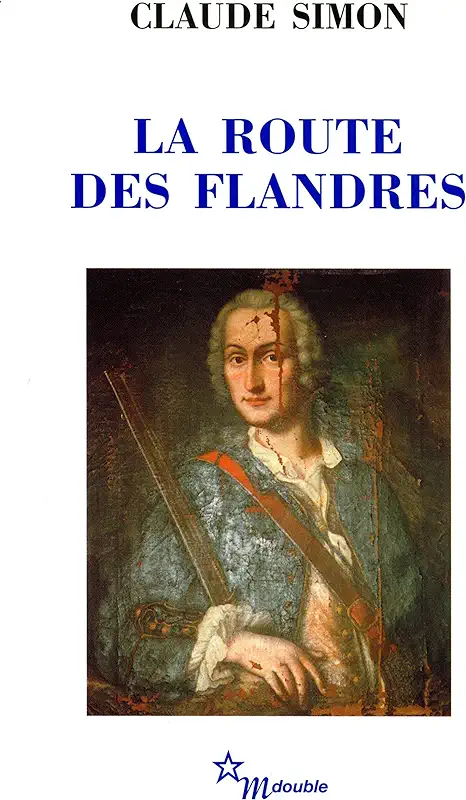
For his part, Hubert de Phalèse, who proposes a "concordance glossary" of the works he studies, proceeds in a methodical manner, using computer tools. I will analyze his approach, in three stages, as he applies it to Claude Simon's novel, The Flanders Road, but any other of his publications would do.
Having a digitized version of the text, he could submit it to the automated version of the Larousse dictionary. Unfortunately, it is not designed to read texts, and it requires manipulation that would be tedious for a work of a certain length. Failing that, it is permissible to suppose that the spell checker of a word processor represents fairly well the extent of the vocabulary that the average French reader masters, more or less well, insofar as they use words whose spelling they feel the need to verify.
Concretely, Hubert de Phalèse first submitted the text of The Flanders Road to the Word7 spell checker, and retained, in a first step, all the words on which it stopped.
The first function of any spell checker is to underline forms whose spelling is different from the canonical one it has in memory, for example "devers" (without accent, p. 290), "d'ouate" (for de ouate p. 270, the elision being optional according to Grévisse); or that it absolutely ignores, such as: "auto-sélection" (65), "arrière-magasin" (270), "casquettiers" (270), etc. The instrument is very useful for spotting typos (from the reference edition or computer input, which should then be corrected), typographic variants from one edition to another, so to speak. It is irreplaceable for signaling graphic peculiarities testifying to the fluctuating character of our spelling, the hesitations of the printers, rather than a will of the novelist.
Indispensable for text analysis, this initial step does not directly contribute to the identification of difficult terms, but it attests to the life of words, in perpetual transformation.
For some reason, the spell checker ignores the past simple and the imperfect subjunctive. Certainly, these verb tenses are used less and less, but they remain taught since primary school and are therefore supposed to be known to the target audience. This is why these forms were not taken into account, nor the repeated forms, nor the heterogeneous passages of the work: the page of the blue-covered notebook, "reproduced" pp. 52-53, whose Italian terms are immediately translated, the "guttural and raspy" names with Arabic consonance (p. 245), finally those of racehorses (enumerated p. 22), and, among proper names (by definition specific) those of the protagonists.
One observation is imperative: sticking to common nouns only, Claude Simon's text does not present great difficulties, since the spell checker ignores only 168 forms out of 91,745. I will draw up their typology below.
However, I must pose a reservation from the outset: no one knows where the forms recorded in the grammatical spell checker dictionaries come from, which are supposed to be established by compilation of entries from various automatic dictionaries, so that it is impossible to specify the level of culture of the presumed users.
On the other hand, this tool only recognizes "forms", that is to say sequences of characters delimited by punctuation or two white spaces, so that it can accept a word whose meaning, in context, escapes the reader, such as, for example, the "carrière" (18), not open-pit mining, nor career path, but training ground for riders.
As a counter-expertise, Hubert de Phalèse used a grammatical and typographic correction software, very used in the book trades, Prolexis. If, here again, we except typographic suggestions, and the categories envisaged above, the number of unknown forms is not different from that of the spell checker associated with the word processor.
In fact, these two instruments intervene first to help the work's commentator to automatically identify relevant stylistic features. Not that they can escape him in simple reading, but because here they come to him in series and make sense.
Thus the various procedures of orality, indicated primarily by the detailed pronunciation of the proper name Reichac, "twenty gods you haven't understood yet: chac l'ixe like ch-che and the ch at the end like k" (44). Hubert de Phalèse has identified the main features: interjections, onomatopoeias, repetitions, truncation, crushing, interruptions, transposition of pronunciation, popular turns of phrase, etc. This, very useful for the stylistician concerned with showing how Claude Simon intends to pass these oral features into the novelistic discourse, does not seem to present any difficulty of interpretation for the subject speaking today's French, and does not really contribute to the recognition of difficult words, but a critical edition must report it, if only to mark the transfer from spoken to written language, and the choices made by the author in this regard.
However, conscious of the empirical nature of his procedure, Hubert de Phalèse sought a more satisfactory support by constituting a comparison corpus, in the text database of the National Institute of the French Language. He asserts:
To characterize the vocabulary of a work, one can only proceed differentially, by comparing it with a vaster corpus that will serve as a background. We must realize that there is no absolute reference in matters of language, that it is impossible to say whether a word is rare or frequent without referring to a precise corpus. I therefore compared The Flanders Road to a set of fifty novels published between 1950 and 1970 available in the Frantext database.
The objective aims to constitute what he fortunately calls the "lexical horizon of expectation" of the reader at the date of publication of the novel, different from mine since I deal with a current reader, different from the supposed "first reader", contemporary with the original publication. By searching, as he does, all the hapax of The Flanders Road (that is to say the words appearing only in this novel) in relation to the novelistic corpus thus formed, we can determine the set of "rare" words of the text. It is gratifying to note that more than 1,500 forms belong exclusively to Claude Simon's novelistic speech (exactly 14.3%), which is very high, and suggests that this author practices a very original language. But perhaps we should relativize this observation by taking into account the particularity of the comparison corpus, which hardly contains works of the so-called New Novel. Nevertheless, on examination, this important list of words brings out what I would willingly call the author's "manner" (orality, equestrian vocabulary, present participle, endings in -esque, etc.), without the recorded forms deserving an erudite commentary. As an example, here is the collection of words beginning with M, obtained in this way:
"macabres; macaques; madrépores; magnétos; mammouths; MANUFre; mariolle; materait; méandreux; médisance; mélangeraient; menuet; merd'; meringues; mésalliances; mesurassent; métamorphosés; milady; minarets; misogyniques; modéliste; moire; molefse; molletonnages; mollettes; monétaires; monosacs; monosyllabiques; morphologie; mozartiennes; muant; musculaires; mythiques".
Of these 33 forms, 10 are unknown to the Word7 spell checker, and 2 are considered errors by Prolexis: an apocopated word ("merd'") and a proper name (Milady). Nevertheless, this list is different from those provided by these two tools when scrutinizing the same novel.
On the other hand, under the same letter M, Hubert de Phalèse's "concordance glossary" contains the 32 entries, as follows:
"macache; macaque; macchab; macchabée; mâchefer; madrépore; Mahomet; mandragore; manège; manger (la boue); maquerelle; margis; mariolle; marlou; Martel; mascaret; méandreux; Milady; micro-photographie; misogynique; molletonnage; monosac; monte; monter (long); monter; moucher; mousqueton, Mozart; mozartien".
Besides proper names, we can see that this list is the compilation (followed by eliminations) of the three collections announced above:
with the help of spell checkers, which stumble on the following terms, belonging to a level of language either popular or vulgar: macache, macchab, macchabée, maquerelle, margis, marlou; either rare, literary, or technical: méandreux, micro-photographie, misogynique, molletonnage, monosac, mozartien;
among the "hapax" enumerated above: macaque, madrépore, mariolle;
by individual identification, through the text: mâchefer, mandragore, manège, monter, moucher, mousqueton.
Here, an explanation is imperative. Indeed, if the tools used in the first place allow to quickly and with minimal effort obtain the nomenclature of a certain category of terms, they never deal with their meaning in the context of a sentence. At present, I know of no instrument capable of supplementing man in this operation. This is why the scholiast, equipped with a pencil, selects, during reading, the words which, in his eyes, present a certain difficulty, either for their amphibology in the statement, or for their rarity, as we will see below.
Consequently, automata could not suffice by themselves to establish the nomenclature of difficult words in a literary work. In other words, if they operate satisfactorily in language, they do not exhaust the incompetences (or ignorances) of the reader in what relates to speech, artistic modulation of an individual discourse.
In Hubert de Phalèse's "concordance glossary", the entries are lemmatized (which means brought back to the canonical form of dictionaries) when the terms are used several times, in declined forms, in the narrative. For each retained term, one will find its concordance, that is to say the minimum context necessary for understanding, followed by the pagination in the reference edition (Éditions de Minuit, "Double" collection) and a notice extracted from digitized dictionaries, the electronic Robert for language; Axis for the encyclopedic part; finally citations collected in FRANTEXT. Under a presentation adapted to text explanation, this is what the exegete of a scholarly edition would do, explicitly indicating his references.
Having explained how this glossary is constituted, I can outline a typology which, it seems to me, could serve as a guide, or grid, to all exegetes.
A first category, relating to what was formerly called philology, is made up of terms with unstable spelling, transpositions of spoken language, figurative expressions.
In matters of spelling, we will observe the distortions to the current norm, already noted, with auto-sélection (compound words with the prefix auto- do not take a hyphen, except for euphonious reasons); and the manifest typos with devers, preposition without accent, instead of the accented noun.
I have already mentioned, above, the various modalities by which Claude Simon accounts for the phenomena of orality in the novel. To the forms identified by automata, which belong to popular language: "ben", "biffin", "cinoche", "crin-crin", "frusques", "gonzesse", "macache", "macchabée", "maquerelle", "marlou", etc., are added familiar turns of phrase, such as "bouffer les pissenlits par la racine" (244), even scabrous ones like "va te faire tarauder l'oignon" (43) or "avoir le cul bordé de nouilles" (43), etc. Even if it is not necessary to explain them for the hypothetical second-year reader who, in France at least, knows rougher ones, a remark is imperative as to the quality of the speakers who use them.
In the same vein we note figurative uses, either lexicalized such as "la clef des champs" (56), or more specialized like "couper l'eau" (11) expression unknown to usage dictionaries, by which riders indicate that they have prevented the horse from choking while drinking. It is a feature of the French language that certain verbs of movement: grimper, sauter, monter, have an erotic connotation, so that they trace a double meaning in this novel. One must be familiar with Claude Simon's work to recognize a sort of tic in the frequent use of the adjective "échassier, échassière", which deserves a specific note. The same goes for the adjectives "emperlé", "endiamanté", or the verb "s'enténébrer" in the reflexive form.
The second category includes forms that are really difficult for the supposed reader, insofar as they do not belong to his usual language, do not appear in usage dictionaries or designate disappeared referents.
It seems to me that a critical edition will necessarily have to explain and comment on all technical or specialized vocabulary, relating, in the present case, to equitation, armament, painting, etc. Indeed, if it is treated in reference dictionaries, it rarely appears under the expected entry and above all it plays a precise role in the narration, as if saturating it, systematically exploring the lexical field for horse breeds, their denomination in all categories of society, the color of their coat, their harness, their gaits, etc. While "buvant dans son blanc" (284), is explained within a Robert notice: "Horse that drinks in the white, that drinks its white, that has the turn of the white mouth", "monter long" (293), which characterizes the way the rider adjusts the length of his stirrups as opposed to the jockey, requires complementary readings or practice of the thing. As for "liste en tête" (284), which designates a band of white hair on the nostrils, expression glossed by Robert which precisely refers to this example of Claude Simon, one must have a well-trained eye to pick it up.
The same observations would apply to military vocabulary or the lexicon of colors, everything that, in short, is considered specialized. It is indispensable to join to it, if not the explanation (because the context is quite enlightening), at least the provenance of certain regionalisms, such as "les chiens ont mangé la boue" (9), Ardennes expression denoting intense cold; the "gonfle" (133), indirectly referring to Roger Martin du Gard; "Flahutes" (289) formerly designating Flemish cyclists in the Tour de France.
This last example leads us directly to all the vocabulary that still appears in current dictionaries, but whose referent has disappeared or been considerably modified, to such an extent that it would require more than a note, a whole chapter of cultural history. What do we know about "assignats" and "billets à ordre", about "baleines" and "cache-corset", about the "robe à crevés" and, even more, about the deep meaning of "chlorotiques" (188) evoking pale colors, romantic disease par excellence? I wonder what meaning the reader will spontaneously attribute to the mention of a "Frisé" (216) in this novel that takes care never to name the enemy!
With this capital letter, we approach the category of proper names, for which it would be easy to apply the initial rule: only terms not appearing (or no longer) in the current Petit Larousse require a commentary. But, as soon as formulated, the norm suffers from many exceptions: should the Dictionary of Les Misérables proposed by Hubert de Phalèse have refrained from mentioning all the French general officers of the Republic and the Empire, on the pretext that they benefit from a notice in this work of republican tradition, while, of course, their English counterparts are not there?
In fact, this is the obscure point of critical editing. In his Techniques of Literary Criticism and History, the very meticulous Gustave Rudler says nothing about this central question, which nevertheless made the strength of the critical editions of the past century, and the protocol of the Pléiade collection that its director, Pierre Buge, was kind enough to communicate to me a few years ago, does not breathe a word of it. This shows how much each commentator is left to his intuition, to the image he has of the recipient of his work, to the feeling he has of the known and the unknown.
The automatic identification of these proper names, their serialization allows us above all to highlight the cultural reference strata, so that, according to the postulated public, we can grant a note to names of mythological, biblical, historical or literary origin. In this case, the important thing is to be consistent and to treat each set.
Finally comes the true neology, enrichment of language by derivation, semantic evolution or absolute creation. In good logic, this is the only aspect of the narrative that requires a precise commentary from the compiler, who, knowing perfectly the entire work of his author, is capable of saying to what extent he shows originality in relation to the scriptural practice of his time.
Formed by shifting grammatical category, the adverbs and adjectives "ancestralement" (11, 294), "incoerciblement" (160), "intouchées" (161), signaled as "rare" in dictionaries, can be considered as true hapax, insofar as they do not appear in the witness corpus of Frantext and are, on the other hand, part of Simonian speech. Similarly the adjectives in -esque: "babelesque" (56), "boy-scoutesque" (176), "donquichottesque" (23), "fourmillesque" (53), formed on the model of "guignolesque", on which Patrick Rebollar has already drawn attention. They were not all forged by Claude Simon, but at least two of them are part of his idiosyncrasy; these are words that sign a work.
A second variety of hapax is formed by semantic shift or borrowing: "corrodante" (65), "disgraciado" (115), "impolluable" (139), impollué (66, 139, 144). Here again, a note is imperative. Not that most of these words cannot be understood with the help of a lexicographic tool, but because it is important to know from which domain they come, and the specific meaning that Claude Simon attributes to them in his own language.
Absolute lexical creations are obviously very rare. In the studied example, apart from compound words: "espace-profondeur" (82), "gentilhomme-farmer" (188), "homme-cheval" (69), whose meaning is clarified by the context, I will only retain two terms: "effusionniste" (189, 264), habituder (293). The first ironizes on Rousseau's philosophy, and the second, which seems a slip but is a true contribution to the evolution of language, could well save us a periphrasis.
At a time when critical editions of so-called "classical" works are multiplying, to the point that the slightest pocket volume contains as much information about the text as scholarly editions such as the collection of Great Writers of France, the Classiques Garnier or the Pléiade Library, asking the question of what needs to be annotated belongs to critical unthought.
Yet, in his daily practice, everyone knows what should be done: the publisher knows his limits (imposed, perhaps, by the cost price of the volume); the pedagogue senses what his audience could not perceive of the text because it does not enter into his mental categories; the reader, who is far from being a passive consumer, suspects the illuminations he would need to concentrate to grasp the entire work and indulge in his unpunished vice. But each of the partners acts as if everything were already codified, as if there were nothing more to be said about it, as if everyone's work had no price, I mean intrinsic value.
What would therefore be today, in contemporary critical editing, the functions of annotating difficult words?
At the formal level, the philological tradition, transmuted into linguistics, having as its object to show the system of singular speech, indicates the way: it signals and explains variations of all kinds, marks transfers from one level of language to another, specific uses, the treatment that a given author imposes on language.
On the substance, the most tenuous, the most difficult to circumscribe, we must recognize, annotation aims, globally, to restore the lost reference or, more precisely, to establish the author's system, at a given moment, on the internal level, through the whole of his production; on the external level, in relation to his universe of reference, whether it belongs to the vast world or to what is consubstantial to it, the bookish world, intertextual to say the least. It is therefore important to possess a glossary (as digitized as possible) of the author's complete works, in order to be able to determine the use he makes of such and such a verbal creation, just as it is necessary to be able to relate it to a relevant corpus of texts of the same genre, at the same time. This is how, it seems to me, "the difficult words", which we have seen do not reduce to wild innovations, can be domesticated.
In truth, if such a practice has never been theorized, despite its concrete necessity, it is perhaps because the public still has in its ear the ukases of the surrealists against commentators. It would be time to react.
i. On this question, refer to the works of Georges Gougenheim et al., The Elaboration of Fundamental French, Credif, 1951 and 1964.
ii. See my article "Hubert de Phalèse's Method", Literary & Linguistic Computing, Oxford, Vol. 10, n° 2, 1995, pp. 129-134, reprinted in French in: Henri Béhar, Literature and its Golem, Paris, Honoré Champion, 1996, coll. Travaux de linguistique quantitative, n° 58, pp. 151-162.
iii. Hubert de Phalèse is the collective name adopted by a research team from the University of Paris III. He has nine titles to his credit, published in the Cap'agreg collection at Nizet.