"The Surrealist Path: Marcel Jean and Arpad Mezei Readers, Critics, Editors of Lautréamont", in Lautréamont, the Other of Literature, proceedings of the VIIIth International Lautréamont Conference, Barcelona, November 22-25, 2006, texts collected by Ricard Ripoll. Cahiers Lautréamont, LXXVII-LXXX, 2007, p. 95-102.
See the announcement and program of the conference on Fabula:
VIIIth International Lautréamont Conference (fabula.org)
The text of this conference appears in full in: H. Béhar, Lights on Maldoror, Paris, Classiques Garnier, 2023, chap. VII, pp. 105-114: Read on Gallica: The Songs of Maldoror
See:
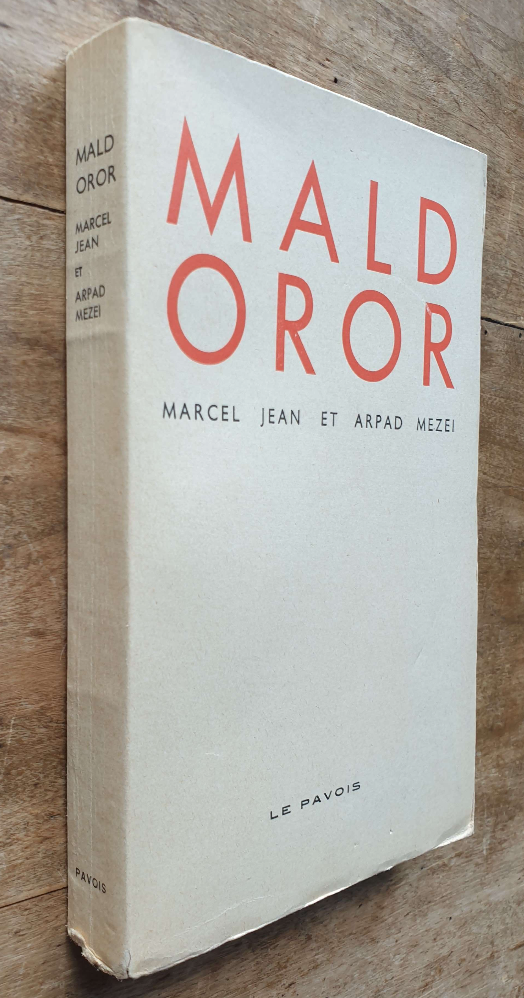
As well as:
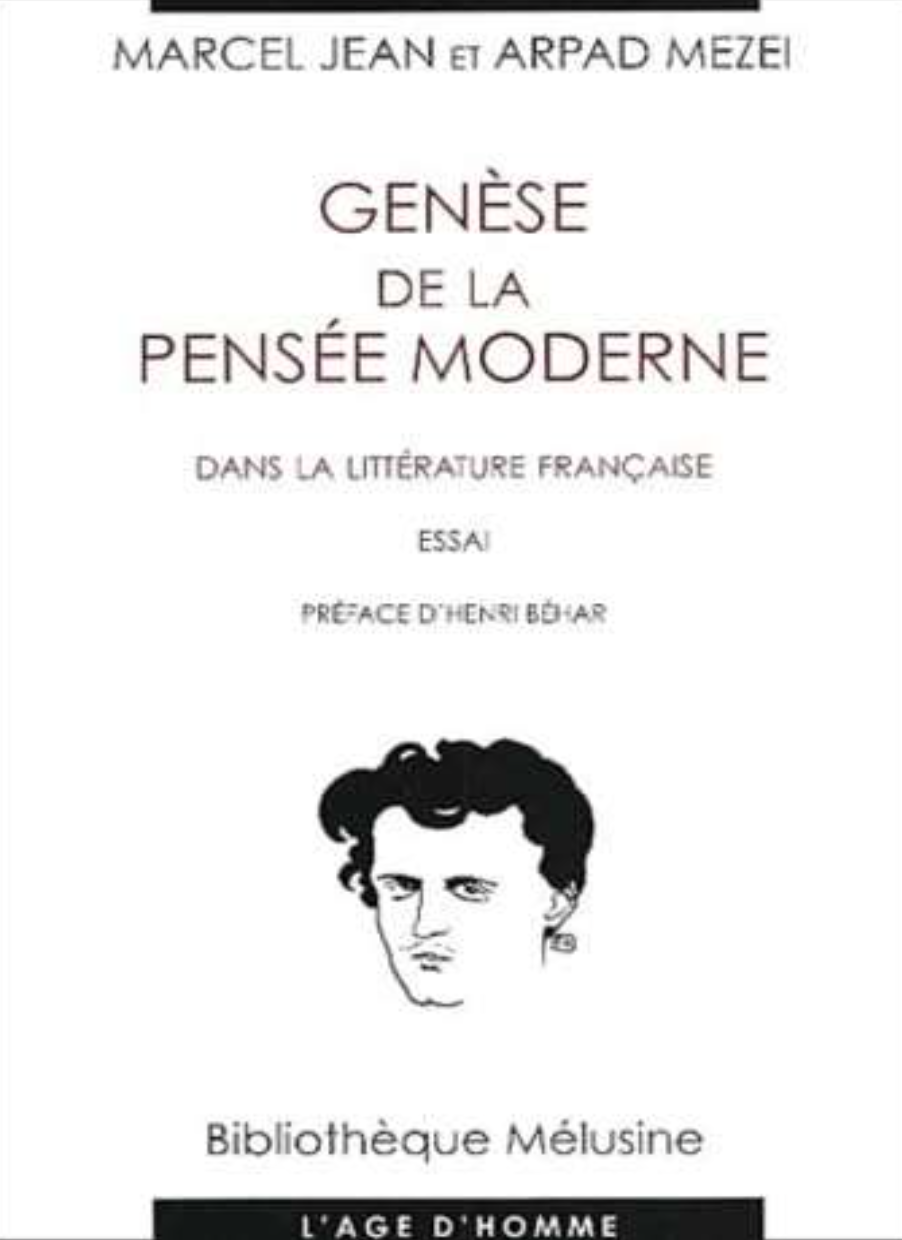
Surrealist literary criticism exists. Genesis of Modern Thought is its most convincing illustration. To the very questionable duality of man and work, Marcel Jean and Arpad Mezei substitute the dialectic of the real and its double, subjective imagination, which must lead to the unity of modern thought. Revolutionary thesis, in the etymological sense of the word, since it is nothing less than finding the meaning of unitary thought, beyond several centuries of this Christian dualism that separates spirit from matter, by identifying the milestones that, from Rabelais to the present day, had allowed it to subsist. To tell the truth, such a reading, synthesizing various approaches to texts, is more of the order of the poetic than of criticism. It is conducted by sympathy and an erudition that attaches less to proving than to suggesting, prolonging and above all determining the configuration of present virtualities. It would be futile to correct what at more than fifty years' distance proves to be erroneous, hazardous or simply denied by time, so much does the whole carry conviction, so much does the constellation of the seven sages here designated: Sade, Lautréamont, Rimbaud, Mallarmé, Jarry, Apollinaire, Roussel, the seven poetic lights of our civilization, now inscribed in the firmament of our modernity.
And on this same site: Mnésiques