"AT WORDS DISCOVERED", EUROPE, NO.555-556, JULY-AUGUST 1975, PP. 95-112.
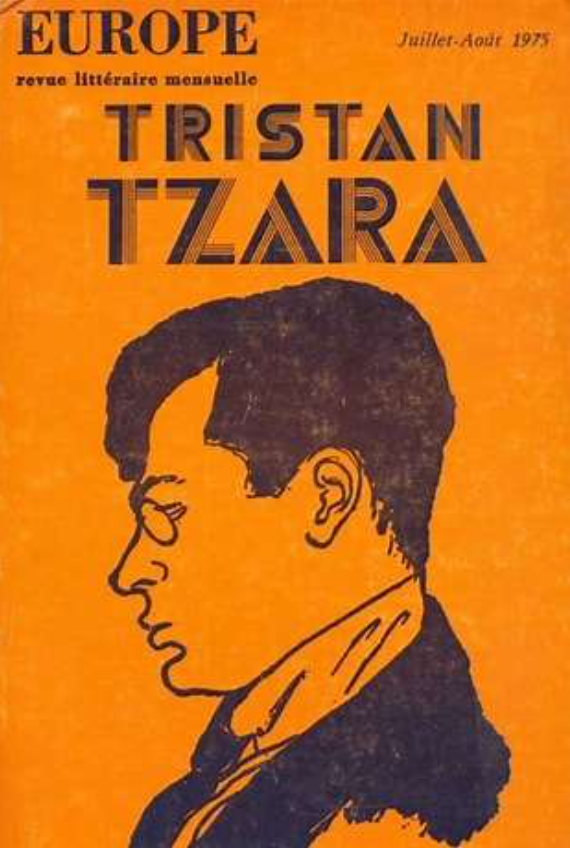
Contributors:
Philippe Soupault – Aragon – Jacques Gaucheron – Henri Behar – Jean Dufournet – Roger Vitrac – Jean Marcenac – Jean Rousselot – Serge Fauchereau – Alain Guérin – Charles Dobzynski – Elena Gorunescu – Arturo Schwarz – Giovanni Lista – Mary-Ann Caws – Gordon Browning – Daniel Leuwers – Jean-Pierre Han – Tristan Tzara
If I had undertaken the publication of Tristan Tzara's Complete Works at Flammarion editions for three years, his speculations on the anagrams of Villon and Rabelais were known only to his peers and a few enthusiasts. I therefore gave an overview for the Europe journal, Tzara's text having only appeared in 1991 in volume VI and last of his CW.
Download the presentation: At Words Discovered. PDF
Article reproduced in HB Littéruptures, p. 205-222.

Read: – Tristan Tzara Complete Works – volume 6
The Secret of Villon
That the man who, nearly half a century ago, founded the Dada movement, should today be this researcher who, from Villon to Rabelais, strives to demonstrate that the obscurity of texts stems essentially from our ignorance of both the social conditions of writers and their biography, will one day be a great subject of astonishment and study declared Aragon in 1963, two months before Tristan Tzara's death.
This sixth and final volume of the Complete Works presents, according to his unpublished manuscripts, the totality of research he conducted for ten years on the use of anagrams in poetry and which he planned to publish under the title The Secret of Villon. Beyond new attributions and biographical details, one will read there, for the first time fully decrypted, Villon's "novel," the story of his thwarted loves, the way he avenged himself on his adversaries as a poet, through a work with double meaning.
One of the most beautiful poems of our literature, among the most obscure and least known, is thus masterfully interpreted by a poet, by virtue of what we know today about the poetic act and its triple narrative, analytical, and playful function. Henri Béhar.
See:
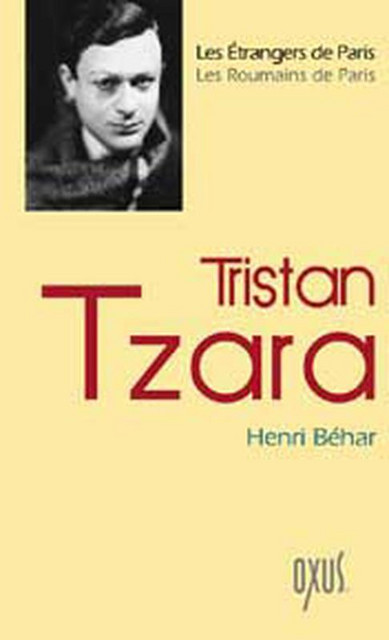
Continue:
LHT No. 5 – Pierre-Yves Testenoire
On an anagrammatic philology: meeting of a linguist (Saussure) and a poet (Tzara).
Not to be confused with: Jean-Pierre Pisetta, AT WORDS DISCOVERED, L'Harmattan, 2014, Amarante Collection.