THE EXCEPTIONAL MOMENT OF THE HUNGARIAN EUROPEAN SCHOOL
par Ágnes Horváth
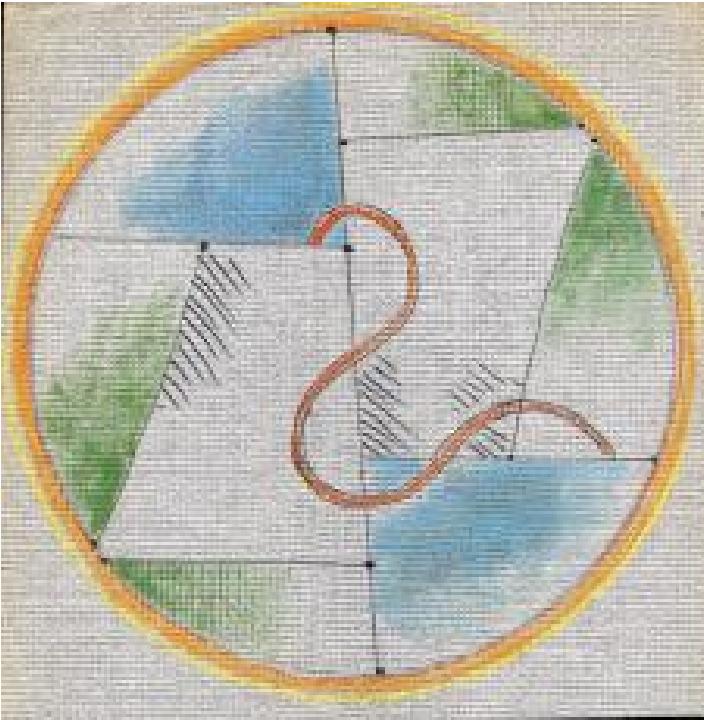
"We want to be bridge builders," Lajos Vajda had predicted. Although ephemeral, running for three short years between 1945 and 1948, the Hungarian surrealist movement of the European School has had and still has an impact on intellectual life in Hungary.
As an introduction, I would like to report a very personal piece of information, because I find it quite indicative of the survival of the School.
The Bateau-Lavoir, nucleus of modern art which, in its tiny studios, once housed painters such as Picasso, Modigliani, Rousseau, Utrillo, the poet Max Jacob, and which was frequented by personalities such as Jarry or Apollinaire, now houses the "premises' of the Association of Friends of Endre Rozsda, surrealist painter, member of the European School, to whom a room served as a studio.
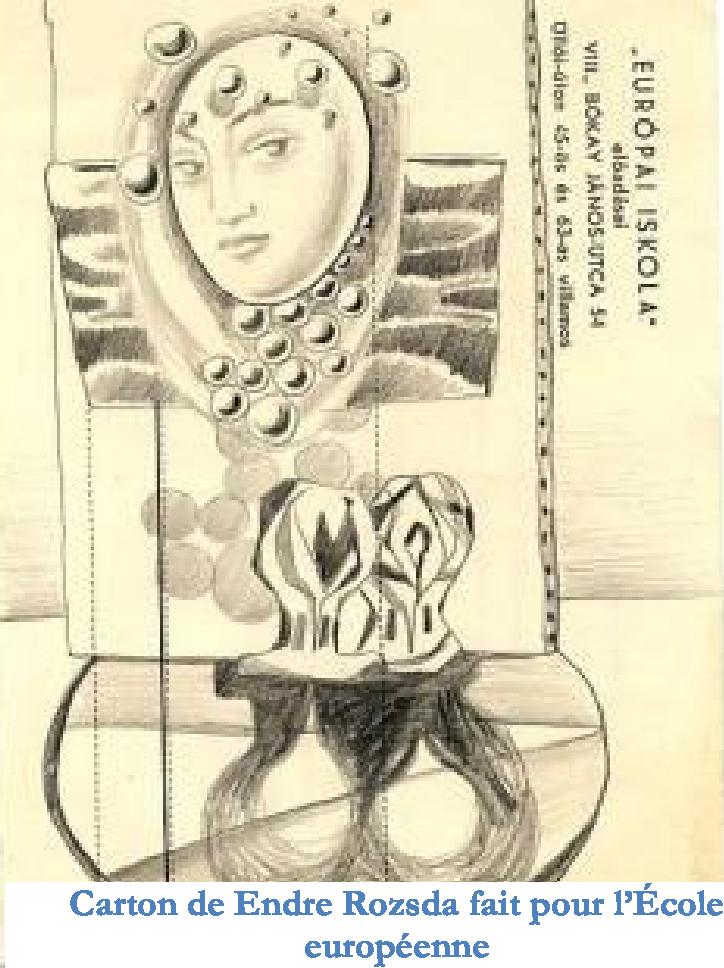
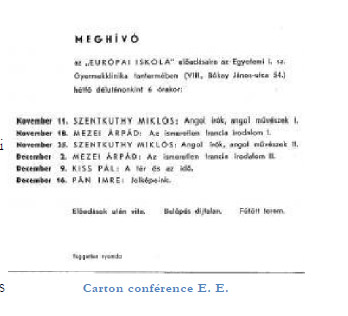
This year I had the honor of being invited there by José Mangani, a member of the Association, who asked me to translate an invitation card written in Hungarian, which he was, of course, unable to decipher. Just reading it, one immediately gets a clear idea of what this School was, what it could be. Having disappeared, not of itself, by a slow death, or by wear and tear, but by the arbitrariness of a power tolerating nothing that smells of freedom of any kind, the European School remains always for many a landmark, a source of inspiration. And the fact that this invitation card to the European School conferences has been preserved in an old studio of the Bateau-Lavoir in Paris, is symbolic to me: because it means the physical, or, if one can say in this case, material meeting of French and Hungarian avant-garde spirit. But finally, what does one read on this card so poor in form, and so rich for what one reads there, and preserved for this same reason with so much care? Here is the text:
Invitation to the following conferences:
October 6, 1945: Current French Poetry, Conference by Érpád Mezei
October 13, 1945: Current English Poetry, Conference by Imre Pán (brother of the previous)
October 20, 1945: Current French Poetry, Conference by Érpád Mezei. Continuation
October 27, 1945: Current English Poetry, Conference by Imre Pán. Continuation.
During a single month therefore and barely four months after the horrors of the Second World War experienced by those who, in different ways, but in any case very closely, will be the future members of the School, four conferences on subjects though current, yet distant from their daily concerns!
And, further down, one reads this, and it's what one has difficulty imagining today:
FREE ENTRY! HEATED ROOM!
Access by such and such tram, etc.
Current French poetry – heated room – both as points of attraction. Simultaneous outpouring of physical and intellectual needs. And human: one warms up listening to conferences together. Because, refuting this time what one of the actors, motors of the School, Ernő Kállai, says about it, namely that public and critics in Hungary are unanimous in protesting against surrealism, that is to say modernity, there, in these post-war years, artists seem to live the same euphoria as the entire country. Truly exceptional moment.
But what are, fundamentally, the aims of the European School? One reads on the title page of the first notebook the following text:
EUROPE, JUST LIKE THE OLD EUROPEAN IDEAL: IN RUINS.
BY EUROPEAN IDEAL, ONE HAD UNTIL THEN UNDERSTOOD A WEST-EUROPEAN IDEAL.
HENCEFORTH, WE MUST REPLACE THIS IDEAL WITH THAT OF AN ALL-EUROPE. NOW, THE NEW EUROPE CAN ONLY ARISE FROM THE SYNTHESIS OF WEST AND EAST.
IN 1945 A.D., EACH MUST DECIDE IF IT IS RIGHTFULLY THAT HE BEARS THE NAME OF EUROPEAN.
IT REMAINS FOR US TO FOUND A LIVING EUROPEAN SCHOOL, CAPABLE OF FORMULATING THE TRIPLE RELATIONSHIP BETWEEN LIFE, MAN, COMMUNITY. OUR TASK IS ABOVE ALL TO DELINEATE THE ACTIVITY OF THE FIRST "EUROPEAN SCHOOL." OUR CONFERENCES, OUR EXHIBITIONS, OUR PUBLICATIONS WILL SERVE THIS SOLE PURPOSE.
YES, IT MUST BE ADMITTED: WE SEEK THE PHILOSOPHER'S STONE WHILE KNOWING THAT THE PHILOSOPHER'S STONE IS NOT SOME CHEMICAL MATTER, BUT INDEED A LIVING IDEA AND WHICH MUST BE BORN IN MAN, IN SOCIETY THEMSELVES.
EUROPEAN SCHOOL.
Follow the signatures of the founders and members, of which I will cite only the most famous: first the one who ensures the heated room in the premises of his clinic, a doctor by profession
Pál Gegesi Kiss, collector, who will donate, in 1957, an important part of his Európai Iskola collection to the Janus Pannonius Museum of Pécs.
The psychologist and art historian Érpád Mezei, whose two major works, The Genesis of Modern Thought (Paris, Corrra, 1950) and The History of Surrealist Painting (Paris, Seuil, 1959) are the fruit of collaboration with Marcel Jean, actor and witness of surrealism, having had many exchanges, notably with Dorothea Tanning, Alexander Calder, Yves Tanguy, Marcel Duchamp, Jacques Prévert, etc.
Theorists of the movement, including Ernő Kállai, art historian, working sometimes at the British Museum, in London, sometimes in Dessau, in the Bauhaus, friend of László Moholy-Nagy;
Lajos Szabó, thinker, then calligrapher, having exhibited in Brussels;
Stefánia Mándy, poet and art historian² author of the until now unique monograph of Vajda (for a reduced version see here)², member of the movement. It is in the apartment of the Tábor-Mándy couple, Haris passage, that the European School will form. Béla Hamvas, thinker, writer, co-author with his wife Katalin Kemény of the book Revolution in Art and whose novel Carnival will come out, we hope, soon in France, comes there to give conferences.
The indefinable Imre PÉN, Mezei's brother – who launches in 1924 a dada periodical, named IS /Also/, driving force of the School, tireless organizer, founder, already in Paris of several artistic journals (Signe, Préverbe, Morphème, etc.).
Finally the artists, first and foremost the painter Lajos Vajda whose art will be this fixed point under the aegis of which the School will place itself. The movement will adopt his artistic conception.
His friend and disciple Endre Bálint, who will exhibit several times in Paris, of which we will retain only the one where he exhibits at the International Exhibition of Surrealism in Paris, Maeght gallery, with Béla Bán at his side and on Breton's invitation, and who will be the illustrator of the Jerusalem Bible (Paris, Labergerie Edition, 1958) with more than a thousand illustrations.
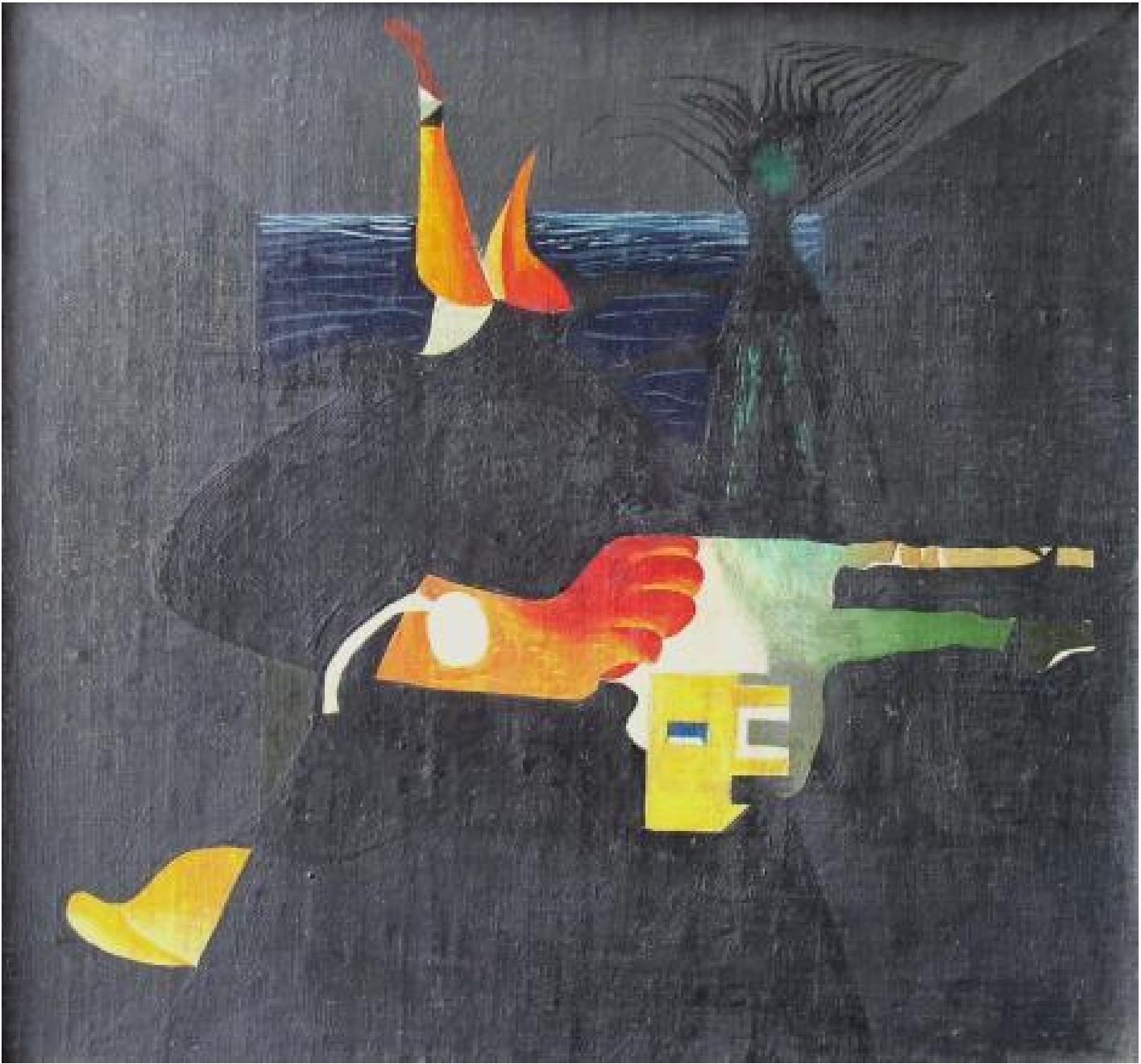
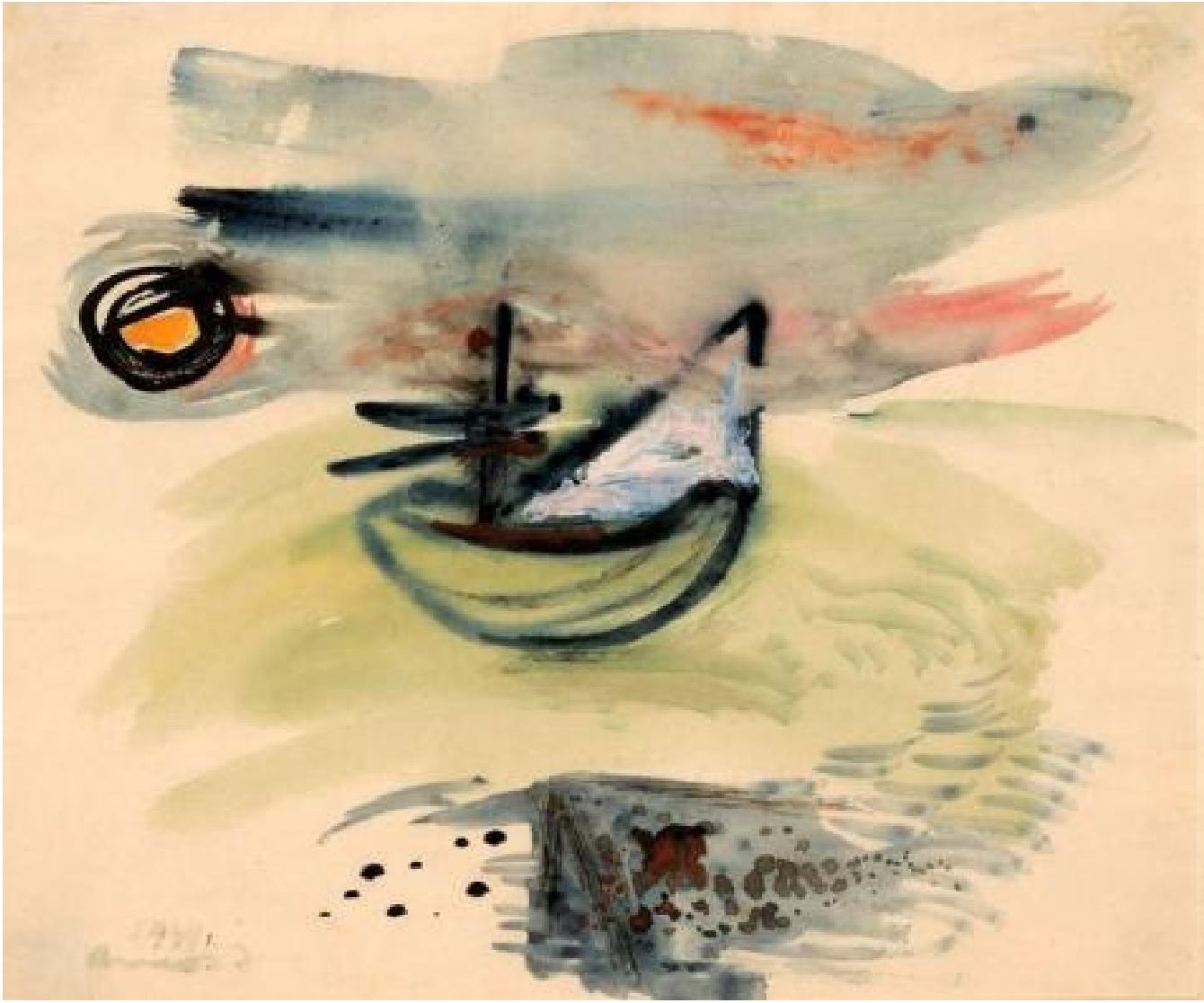
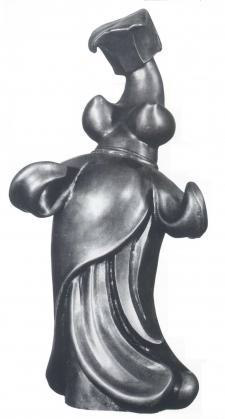
Margit Anna, Endre Rozsda, Endre Martyn, Imre Émos, József Jakovits, the surrealist sculptor par excellence,
and Lajos Kassák, always ready to make revolution "on condition that it starts from traditions."
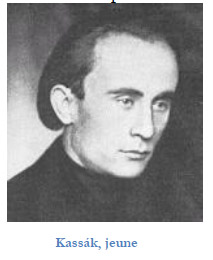
Yes, Kassák, who is at the origin of the entire Hungarian modernist movement. Through his art, and through his talent as an organizer and his inflexible character. To show to what extent he had remained the same until the end of his days, an anecdote reported by Bálint who, at the time of the episode, lives in Paris:
"In 1958, on the terrace of the café Aux deux Magots, I meet Tristan Tzara to whom I had to transmit a message on behalf of Kassák. I armed myself with courage and approached him. I don't know what Tzara seemed most astonished by: the "petit nègre" nature of my French, or the happy news that Kassák (his elder by 9 years, aged then seventy-one) was still alive... And, a little later, during a stay in Paris, Kassák wanted to see Tzara to ask him what he was occupied with. 'Medieval poetry, old songs, anagrams, that kind of thing – replied Tzara. "He's screwed, this guy" – said Kassák, and I still don't know if the conciseness of this word was felt or not." In the French translation, obviously, because in Hungarian it's a single word: Elcseszte.
Such was Kassák, always "intransigent" when it came to art and modernity. Kassák, whom one underestimates, whom one tends to forget, Kassák, the leader of every progressive movement, poet and painter, organizer, solid as an oak, supportive as few are. And, let us not forget, Kassák is a bridge between Budapest and Vienna, between Budapest and Paris (he is linked with Tzara since 1920, he publishes just after their appearance in Paris works by Apollinaire, Picasso, etc.) finally, a bridge that we Hungarians need so much.
With his journals, and their titles, Tett (Action), Munka (Work), Dokumentum (Document), Kortárs (Contemporary), Alkotás (Creation), he created a public never seen since. These titles sound dry, like a hammer blow, to say just what is necessary – Bálint will say later of him.
His collaborators and/or disciples who sooner or later did not fail to leave the sometimes tyrannical master, will nonetheless make, for the most part, brilliant careers. Either they leave Hungary to make a name for themselves in Europe or America (Robert Capa, the photographer, Alexandre Trauner, the cinema set designer in Hollywood, George Kepes, the light artist, to name but the most famous.) Or one finds them in or around the European School, like Vajda, of posthumous fame, Dezső Korniss, etc.
Talent, openness towards Europe, openness towards other domains of activity than his own are the three cardinal points determining the orientation, character and survival of the movement.
Besides Kassák's personality and organizing activity, it is still this political constellation, exceptional in the history of Hungary that will allow the birth of such a formation. It is a question, as has just been said, of Freedom, of increased freedom: liberation from the feudal air of the Horthy era – if I may be allowed a play on homonyms – and from the Nazi-arrow cross regime. There is this moment of happiness where little people and artists find themselves close to each other, living euphoria in common. At a moment when Art, instead of being considered – as it was before and as it will be after – as a luxury product, a "good for nothing," is an integral part of life. This is what makes the European School flourish and flower during its three short years, which nevertheless allowed the organization of thirty-eight exhibitions (!), the publication of almost as many catalogs, and notebooks. To give an idea of the distance that then separated Hungary from France, it suffices to cite Corneille, one of the founders of the CoBrA movement (Copenhagen, Brussels, Amsterdam), who meets Jacques Doucet, having recently exhibited in Dunkirk, precisely in Budapest: It was (Budapest) for me like another part of the world, like an unknown continent. By taking the train or plane, one is there in little time. But at the time, for me, it appeared to me as some Hawaii or almost. "Life lives and wants to live" – to take up this word of Endre Ady. And this Life will find its aegis in the choice, on the one hand, of the name European School, direct allusion to the School of Paris, of which it wants by no means to be some subsidiary! And designating less a tendency than the influx towards Paris of artists coming from everywhere, but especially from Eastern Europe thus justifying the title of Paris, capital of the arts!
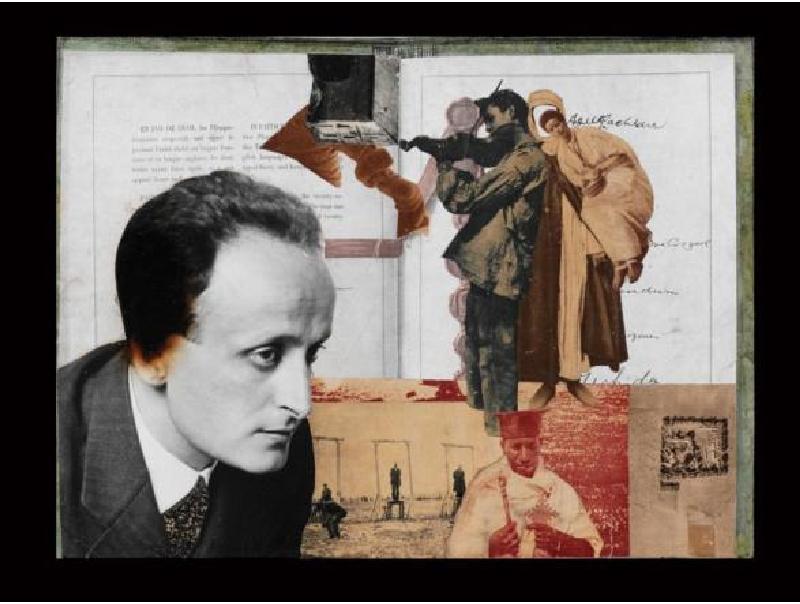
The other emblem, it is the very person of Lajos Vajda, this painter whose first exhibition in 1929 was organized precisely by Kassák"s Munka-kör. The same one who will set out in search of those modern traditions that had proclaimed, before him, Guillaume Apollinaire in his conference-manifesto The New Spirit and the Poets. The same one of whom his friend and comrade, Lajos Szabó, will say later of his paintings that they are cosmograms, signs presenting entire universes. The same one finally whose paintings – at an era that could boast of so many illustrious names – are not signed. If modern traditions exist, why deny the existence of an anonymous collectivity? Vajda has a profession of faith, he therefore became a seeker. And who will seek throughout his life, during, in sum, his 33 years, "the secret and abstract essence of things."
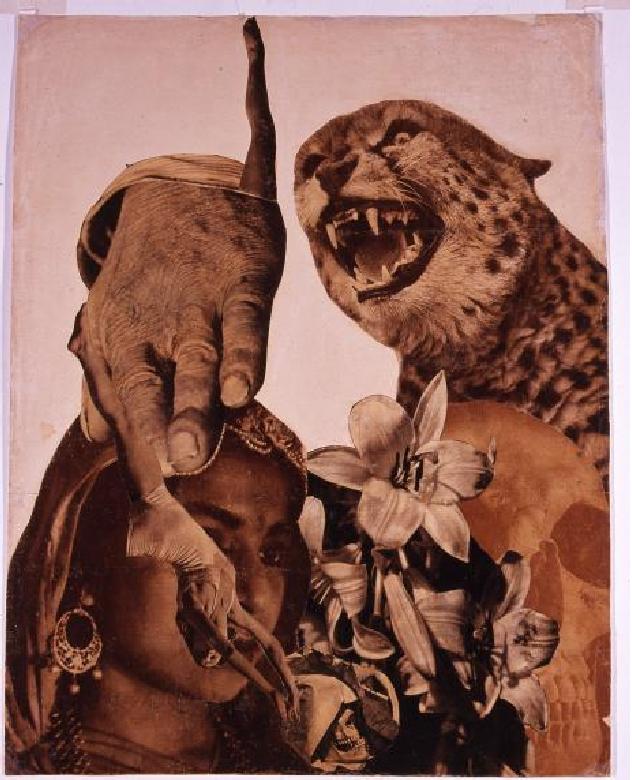
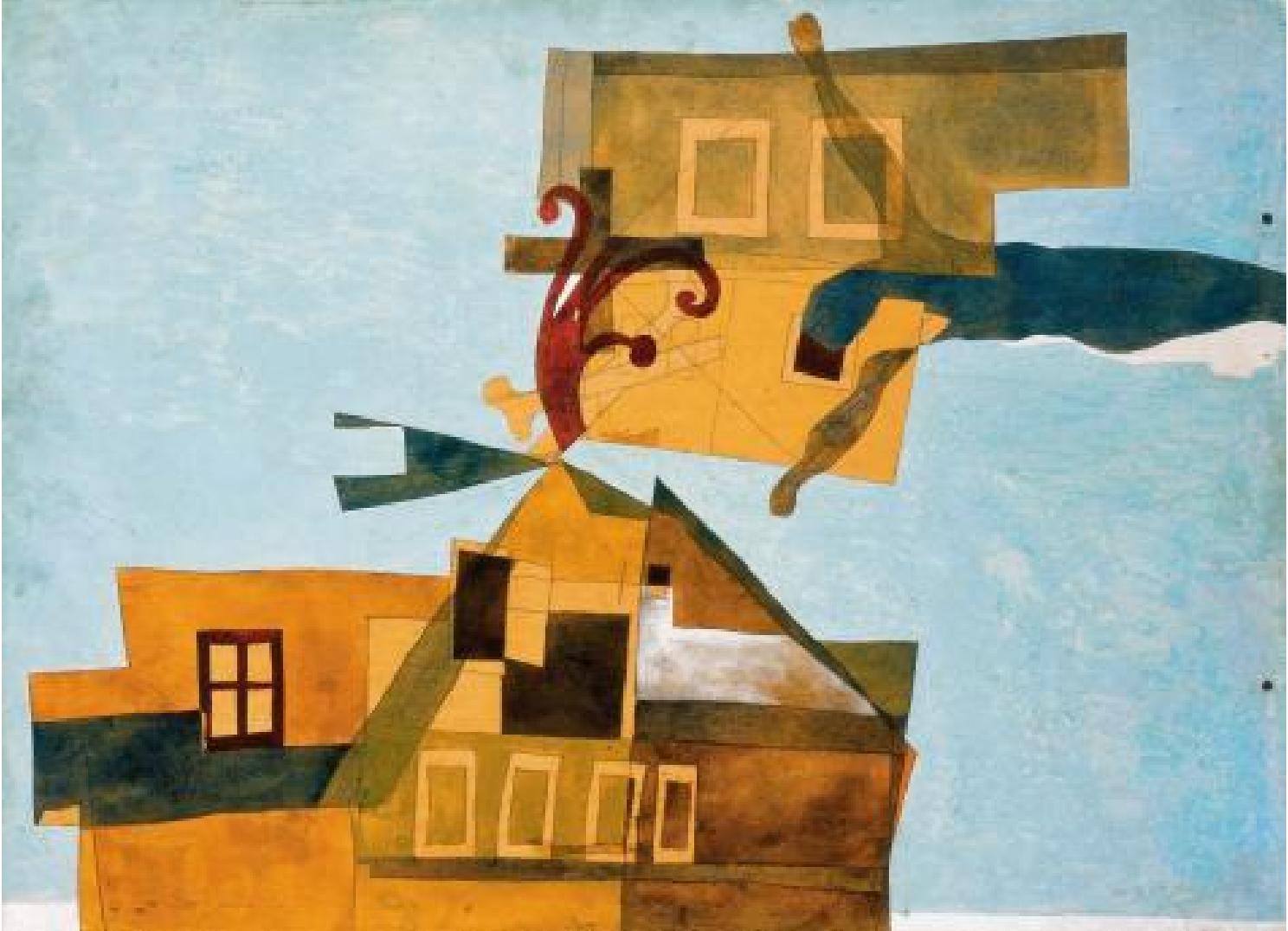
The words he addresses by letter to his wife, the painter Júlia Vajda, also a member of the School, will become the "so-called Szentendre program," orientation that the European School will precisely take: We would have much to do, but it is impossible to realize anything in these conditions (of domination). I would like to sketch the (dialectical) unity coming from the crossing of our fields of interest. Here are two men: Korniss and Vajda. Both born in 1908, in "Greater Hungary."
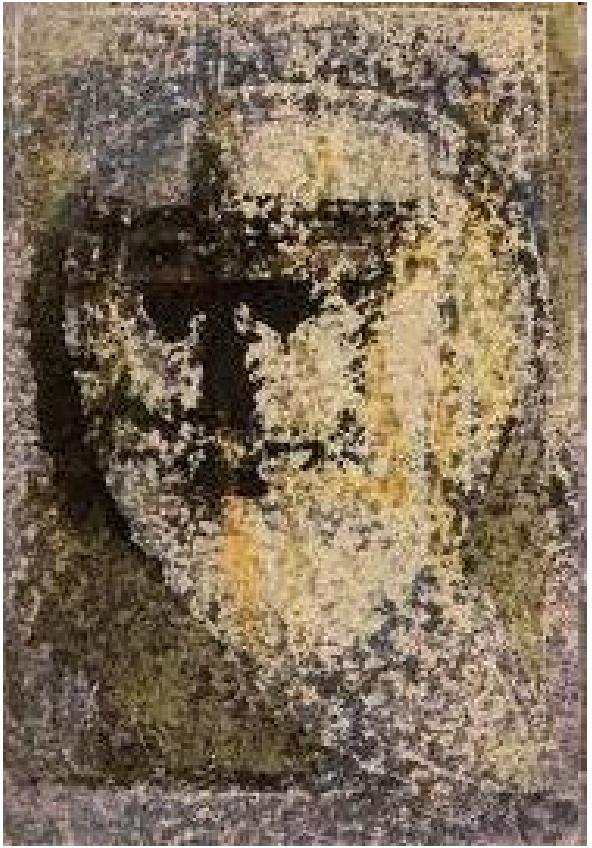
Korniss is a Szekler Catholic of Greek rite, Vajda is a Hungarian of Jewish origin, under the influence of Serbian effects. Korniss is born in Szekler land, Vajda, in Göcsej (interesting region of the Zala region from the point of view of folklore).
Of Western origin, I orient myself towards Russia and Serbia (therefore towards the East), while Korniss, of Eastern origin, towards France and Holland (where, as a child, he lived for a moment). It follows therefore that our aspirations tend to form a new art, specifically of Central and Eastern Europe – via the influences of the two great European cultural centers (French and Russian). The (geographical) situation of Hungary in Europe predestines it to serve as a link between the West (France) and the East (Russia). We want to weld, re-unite what represents the artistic expression (in the arts) of the two types of European man living on these two poles. We want to be bridge builders. Hungary representing a bridge between East and West, between North and South.
Here, to finish this presentation, in chronological order, some exhibitions and publications of the European School:
- Endre Rozsda, painter and Lajos Barta, sculptor
Conferences and guides.
Speakers: Béla Hamvas, Lajos Kassák, Pál Gegessi Kiss, Imre Pán, Miklós Szentkuthy (surrealist writer, successor of Joyce), Sándor Weöres (surrealist poet, of exceptional talent)
- Young people
I will retain among the participants only the illustrious names, including Simon Hantaï, having in Paris, at
Beaubourg a room all to himself.
- Franco-Hungarian exhibition
Organized by Dezső Korniss and Imre Pán, inaugurated by François Gachot, cultural attaché, translator,
and finally ambassador in France of Hungarian culture, and Pál Gegesi Kiss.
Participants: Bonnard, Bauquier, Braque, Burtin, Chevalier, Fourgeron, Gimond, Gromaire, Laurencin, Léger, Lhote, Maillol, Matisse, Picasso, Pignon, S. Roger, Vuillard, – as well as the members of the "Parisian group": István Beöthy (alias Etienne Béothy), Bertalan, Vera Braun, Csáky (alias Joseph Csaky, collaborator of Jacques Doucet), Gertler, Gömöri, Gressova, Hajdú (known rather as Étienne Hajdu, member as much of the School of Paris as of the European School), Kolozsvári, Lengyel, Marton, Pór, Schaffer (alias Nicolas Schöffer), Vörös.
Paintings by Corneille who, in 2002, will have a retrospective exhibition in the Museum of Fine Arts of Budapest.
Paintings by Jacques Doucet, who, the same year, on the occasion of his first exhibition in Budapest, will meet Corneille, with whom they will discover Hungarian surrealism. Members of CoBrA.
Skupina Ra – parallel tendencies in Slovakia
The lithographs of Arp, Chirico, Kandinsky, Klee, Laurens, Matisse, Miró
Bálint's Paris paintings
PUBLICATIONS:
Éluard, Proust, Apollinaire on Picasso, Baudelaire, Breton on Sade, Picasso's remarks on modern art…
Rimbaud's Illuminations – Dezső Korniss
Hamvas–Kemény, Revolution in Art
Brief bibliography: Kállai, Ernő: "Wo stehen unsere jungen Künstler?", Pester Lloyd, 1940, December 25.
Max, Bill: "Modern Hungarian Art," Werk, 1946/11.
Passuth, Krisztina: "Endre Bálint"s Paintings", The New Hungarian Quarterly, 1965, 18.
Mándy, Stefánia: Endre Bálint, Paris, Desclée de Brouwer, 1966.
Németh, Lajos: "Current Exhibitions", The New Hungarian Quarterly, 1968, 32.
Nagy, Zoltán: "Looking back at the European School", The New Hungarian Quarterly, 1974, 55.
Láncz, Sándor: "The European School", Acta Historiae Artium, 1975/1–2. (Tom. XXI.)
Nagy, Zoltán: "From Pictures to Objects". Endre Bálint"s Exhibition in the museum of Applied Arts", The New Hungarian Quarterly,, 1976, 6.
Chénieux, Jacqueline: "French Surrealism and Hungarian Avant-garde", Bulletin de liaison, no 6, CNRS, 1976.
Passuth, Krisztina: "Hungary after the Second World War: The European School", Bulletin de liaison, no 7, CNRS, 1977.
Bojtár, Olivér: "Ernő Kállai and the Hidden Face of Nature", The Structurist, No 23-24, 1983-84.
And, recently, an album in English and Flemish:
Lajos Vajda – Touch of Dephts:
http://www.balassikiado.hu/product.php?id_product=388 I owe much to the book by Péter GYÖRGY – Gábor PATAKI, Az Európai Iskola – és az elvont művészek csoportja (The European School and the group of abstract artists, Budapest, Corvina, 1988).
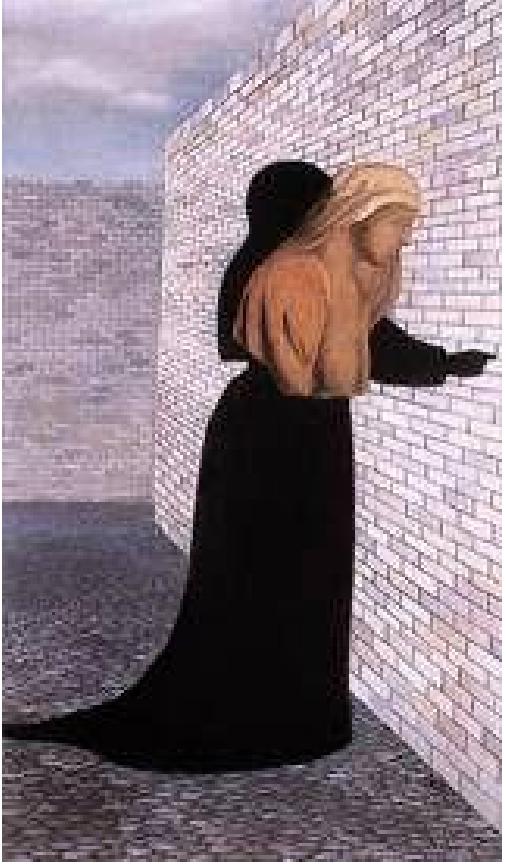
Opening this article: painting by Júlia Vajda, wife of Lajos Vajda (see here).