"ARAGON, THE TONE OF LAUTRÉAMONT," IN IN THE WORKSHOP OF A WRITER: ARAGON’S NINETEENTH CENTURY, TEXTS EDITED BY ÉDOUARD BÉGUIN AND SUZANNE RAVIS, PUBLICATIONS DE L’UNIVERSITÉ DE PROVENCE, 2003, PP. 27–39.
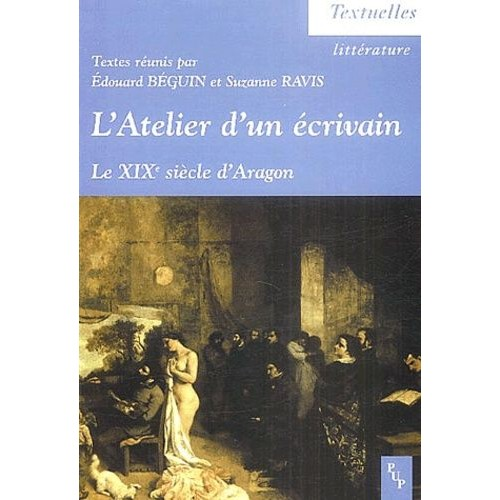
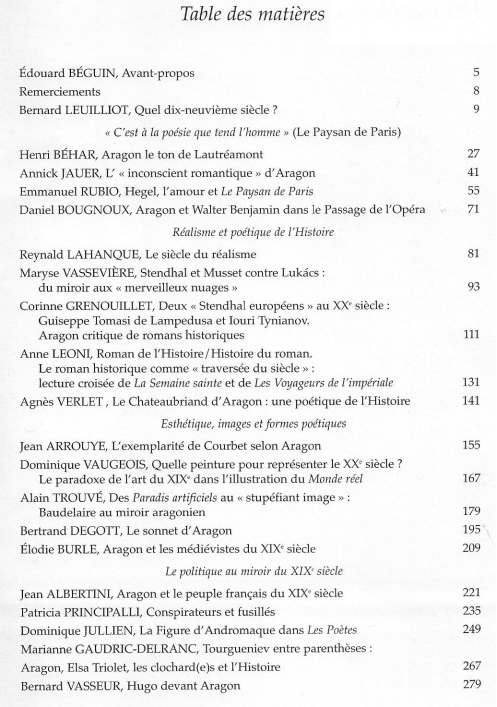
“This nineteenth century ‘I come from’,” Aragon might have written. Born in 1897, he never wiped the slate clean of the “literary heritage.” For him, the nineteenth century is “that great century,” the inventor of modernity; to reinvent this inherited modernity—thus to perform a transformative return to the nineteenth century—is at the heart of his creative project. How has this past, constantly refigured through the present tense of his writing, helped to shape the unique voice and trajectory of the writer? Here we present some answers offered by scholars familiar with Aragon’s work or with surrealism, through concrete examples of his relationship with Baudelaire, Hugo, Stendhal, Lautréamont, and others, along with several synthetic essays.
This volume contains the proceedings of the symposium held at ENS Lettres et Sciences Humaines, Lyon, December 13–15, 2001, at the École normale supérieure Lettres et Sciences humaines.
Published by the Centre d’études poétiques, Publications de l’Université de Provence, 2003
Collection Textuelles: Littérature
Article also reprinted in the following volume:
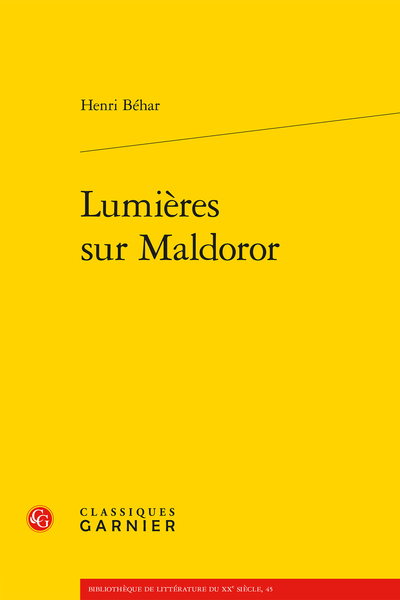
Henri Béhar, Lumières sur Maldoror, Paris, Classiques Garnier, 2023, pp. 83–95.
Collection: Bibliothèque de littérature du XXe siècle, No. 45
See also: The Aragon workspace
Read: Aragon, “Lautréamont et nous”, in Lautréamont et nous
Louis Aragon, FeniXX Digital Edition (Sables), April 23, 2021
“In this very journal, Marcelin Pleynet wrote that what always struck him most is that Lautréamont's commentators only speak of themselves—they do not speak about Lautréamont, but it is Lautréamont who makes them speak. It is on this deliberate statement that I wrote this ‘Lautréamont et nous’—a text that not only falls into that trap, but plunges deliberately into that abyss.” — Louis Aragon
More to explore:
- Peter W. Nesselroth
- Alain Trouvé, The Lautréamont-Ducasse Intertext in the Works of Aragon and Ponge, ENS éditions
- Visit the Aragon site
- ERITA (Aragon–Triolet) website
- Aragon’s Works in the Gallimard/La Pléiade Collection
- Visit the Maldoror portal
More on Aragon, also available on this site:
- “The Dada Parenthesis”, Aragon, Europe, No. 745, May 1991, pp. 34–44
- “The Lexicon in Aragon’s Poetic Work: A Thoroughly French Poet”, in Cécile Narjoux (ed.), La Langue d’Aragon, ‘a constellation of words’, Éditions universitaires de Dijon, 2011, pp. 27–44
- “Aragon–Breton: In the Time of Stellar Friendship”, Europe, No. 993–994, Jan–Feb 2012, pp. 311–316