André Breton and the great news story,
Literary Stories,
n°53, January-February-March 2013
If there is one thing to which one cannot imagine André Breton having been interested, it is certainly the news story, whether journalistic or simply factual. However, from his literary beginnings, at a time when he felt depressed and thought to find a certain tonic in dada activity, he declared that he preferred the slightest news story to "all art criticism[1]", while observing that despite the brainwashing to which the press had indulged during the war, his friends and he had well known how to resist the triumphalist communiqués of the generals. In other words, "Rather life" he would say, with its long waits and contradictions, its premonitions too, rather life than literature, as he suggests in a long eponymous poem of the same period.
At the same time, to borrow a familiar image that suits him completely, the syrup of the streets was his only food. He recalls this in "The Disdainful Confession": "the street with its anxieties and looks, was my true element: I took there like nowhere else the wind of the eventual." As if he expected from it a revelation, or, more simply, a jolt of existence. On a page of his notebook, by definition not intended for publication, he notes that, on December 17, 1920, at 11 o'clock in the evening, leaving the Notre-Dame-des-Champs metro station, he crossed paths with an elderly woman whose behavior indicated madness, then a man, "of ordinary appearance", who was obstinately looking at the "Exit" sign on the metro platform: "he seems to have gotten off the last train, like me". Breton worries: "I rush home. I tremble[2]." This is not the shiver of the wing of imbecility, but already the New Spirit, as the surrealists will understand it, this "uncanny strangeness" that he will note several times afterwards. For example in the company of Derain and Aragon who reacted in the same way to the encounter with a young woman of uncommon beauty, at Saint-Germain-des-Prés, and whom they would want to find again, in vain. This episode is noted in a page of The Lost Steps on which Nadja stops precisely, so much is it imbued with enigma. The heroine of the new story, remaining "beating like a door", shows herself disappointed, impatient, and even dismayed by the absence of resolution of such an event, or rather non-event. Now this "objective chance", to use the Hegelian terminology, will be at work, again, in The Communicating Vessels and in Mad Love.
The news story flows abundantly from the mouth of shadow or, more concretely, from those who let themselves fall asleep while making the chain of hands, during what historiography has, subsequently, called the period of sleeps. "In the conditions of darkness and silence required in such cases, Crevel does not delay, indeed, to hit his head against the wood of the table and, almost immediately, launches into a long spoken improvisation. The subject of this improvisation, treated in a disjointed manner, is of the order of the news story" Breton recalls in a radio interview[3], regretting that it was not recorded at the time. It is permissible to wonder what the waking dreamers expected from such a practice, borrowed from spiritualism, if they were to produce only discourses of this nature! However, precisely, it brought them back through this means to the daily life from which they thought to escape. When it did not end with threats, an attempted murder and even an incitement to collective hanging! We understand that Breton could never fall asleep, too concerned about the conduct of the sessions he presided over.
Characteristic of the triumphant phase of surrealism, automatic writing (which should not be confused with the previous experience, but which derives from it) is full of these small news stories, mnemonic traces of the day's events. The Magnetic Fields, written in collaboration by Breton and Soupault, bear witness to this. Thus, at random of the paper cutter between the pages of the book: "The night watchman fixes a yellow and red lantern and talks to himself of the hours aloud, but his prudence does not always produce the expected effect." Thing seen, followed by a brief internal comment, as if to oneself. It matters little that, thanks to the manuscript, one can say from which of the two collaborators it emanates. The fact is that it appears in the book, assumed by the authors. Further on, it is a police officer from the 6th arrondissement who sees a man running out of a café, dropping a notebook from his pocket... We think of this anecdote featuring a certain Mr. Delouit, incapable of retaining his name, passing through the window and asking the hotelier again for his room number. Brief story that the author could not help telling to the real person named X, in the last pages of Nadja, and which has made flows of philosophical ink flow on the nature of personality, memory and then forgetting.
Just as, in The Communicating Vessels, he attributes his taste for the noir novel to the terrifying stories that a teacher read, at the end of classes, to his six-year-old students, we can suppose that this manifested taste for news stories comes to him from reading the daily newspaper that his father received, and the comments that ensued. We find an irrefutable trace of this with the Henriot affair, which appears in the background of chapter VI of Mad Love. Certainly, the two lovers suffered, in an incomprehensible and totally irrational manner, the deleterious effects of a precise place. Certainly, they went through a crisis at the very moment when they were on the moor, near an uninhabited house, unusual in this place, about which they would learn on their return that it had been the theater, two years earlier, of a horrible crime. It is then that Breton provides the reader with an extremely well-informed summary of "the Villa du Loch affair", as the local press called it: "a young woman killed, by means of a hunting rifle, in this house that I had glimpsed; her husband Michel Henriot, son of the public prosecutor of Lorient, testifying that the murder had taken place in his absence and probably should be put to the account of some tramp, like several other recent crimes that remained unpunished."
In fact, as I have shown in André Breton the great undesirable after having myself reread the local press of the time, the narrator proceeds to a synthesis, in chronological order, of the very numerous dispatches of the Nouvelliste du Morbihan, daily newspaper of Lorient, which he could have read on the occasion of his previous summer stays, both after the crime of May 8, 1934 and during the trial, which was held at the Assizes of Vannes the following year, or that his parents had set aside. Then he draws a psychological portrait of the murderer, and provides a summary of the victim's letters to her young sister, published by the same journal[4].
I understand well that all this only intervenes after the disastrous walk, but the halo with which he has adorned the house, the illusion of false recognition (or Capgras syndrome) concerning the metal trellis enclosing the silver foxes that the prosecutor's son raised, and which Breton could not see from the path, these mental representations do they not come from previous information, certainly forgotten at the time, which lined his memory, and, despite his denials, were only asking to resurface on the very spot?
Among other factitious collections of press clippings, an album in black percaline, probably constituted during his trip to Gaspésie, testifies to the taste that the author of Arcane 17 manifested for the scrapbook or collage, according to the term proposed by the Quebecois. Appeared at the sale of his studio (and now preserved at the Kandinsky Library at the Pompidou Center), it contains clippings, often illustrated, from Quebec (La Patrie) and American (The New Yorker) newspapers, and many other documents commemorating his New York stay, notably the catalog of the Miró exhibition at the Pierre Matisse Gallery in 1945, the invitation card designed by Marcel Duchamp for the exhibition "Through the big end of this opera glass" in which Duchamp, Tanguy and Cornell participated. In addition to postcards from the Gaspé road, the Percé Rock and the gannets, mentioned in Arcane 17[5], one can read a good number of articles relating to agates, to the echoes given by the American press to Sartre's articles during his first stay in New York, to Aragon's comments on Gide, a tribute to the young poet Diamant-Berger, who died during the Normandy landing, and especially on the reconstitution of parties in France at the Liberation. All information that will feed his later reflections and remarks.
Breton was therefore interested in news stories. Several of them have moreover aroused, at his initiative most often, positions taken by the surrealists, acting collectively.
Thus, they testify their admiration for Germaine Berton (note the metathesis of her own surname) who, in their eyes, had the courage to shoot down, on January 22, 1923, Marius Plateau, a Camelot du roi, secretary of the Action française League (simple work accident, Aragon would deduce). After her acquittal (December 24, 1923), they place her anthropometric portrait on a full page of the first issue of La Révolution surréaliste, surrounded by photos of all the surrealists of the hour, with this rocket from Baudelaire: "Woman is the being who projects the greatest shadow or the greatest light in our dreams".
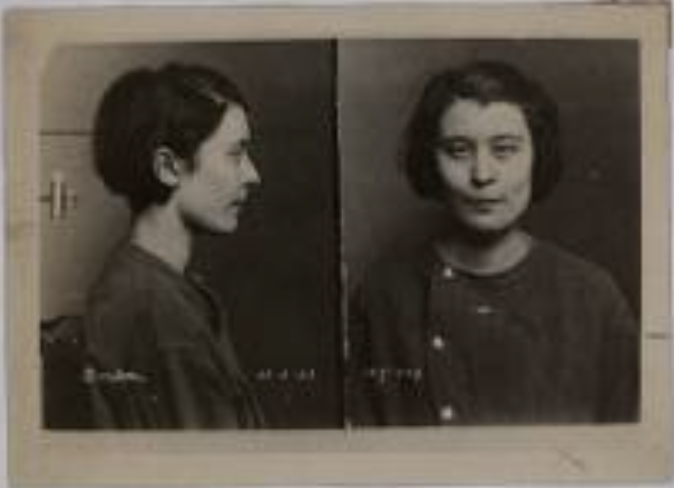
At the end of her trial, Breton and his friends had brought her a basket of red roses with these words: "To Germaine Berton, who did what we did not know how to do[6]." At the moment when, despairing again of true life, he was considering no longer writing, he would confide to Roger Vitrac: "For me, Germaine Berton's opinion is infinitely more considerable than André Gide's." (Journal du Peuple, April 1923).
Response to anguished questions about the fact of writing, of publishing, the news story here adorns itself with the colors of anarchy, political ideal to which Breton never renounced.
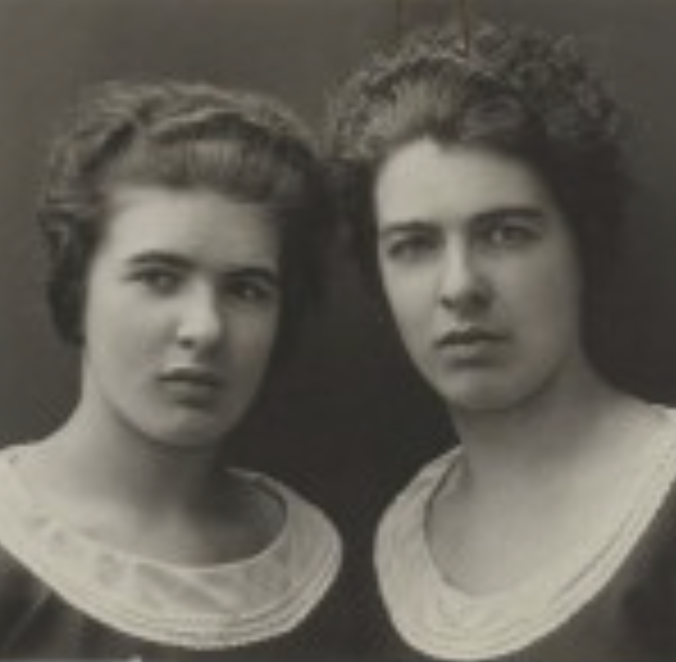
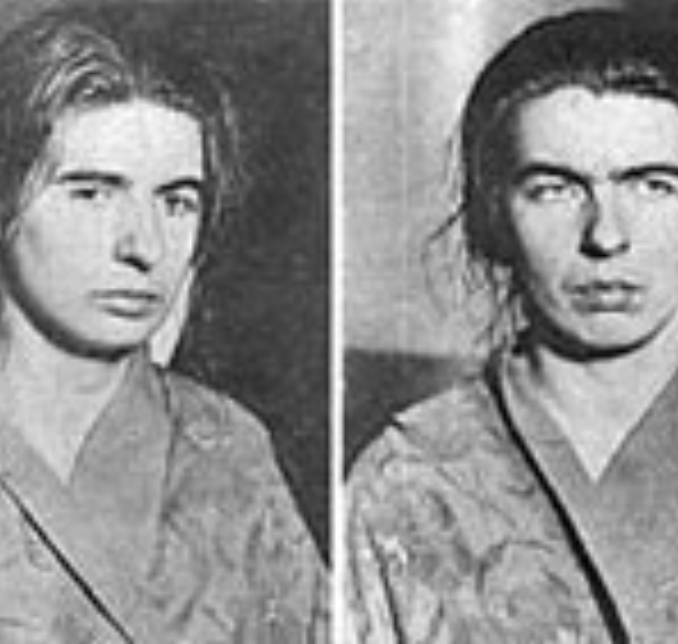
Ten years after the Berton affair, Breton takes up the cause for two young women, murderous domestic servants of their mistress. The news story, perfectly summarized by Paul Éluard and Benjamin Péret, immediately emphasizes the social interpretation that the surrealists intend to give it (unlike the one that Dr. Jacques Lacan will expose in his thesis): "The Papin sisters were raised at the convent of Le Mans. Then their mother placed them in a 'bourgeois' house in this city. Six years, they endured with the most perfect submission observations, demands, insults. Fear, fatigue, humiliation, slowly gave birth in them to hatred, this very sweet alcohol that consoles in secret because it promises violence to join it, sooner or later, physical force./ When the day came, Léa and Christine Papin gave the evil its change, a change of red-hot iron. They literally massacred their mistresses, tearing out their eyes, crushing their heads. Then they washed themselves carefully and, delivered, indifferent, went to bed. The lightning had fallen, the wood burned, the sun definitively extinguished. They came out fully armed from a song of Maldoror[7]..."
During a collective game consisting of quickly interpreting certain objects, André Breton sees the sorceress Circe as a historical character through a crystal ball, in a desert, with "the most beautiful piece of luxury lingerie in the Papin sisters' wardrobe and the tin pot of the crime". He will return to it on the occasion of the release of the film Les Abysses, by Nico Papatakis, offering on a page of the journal La Brèche (n° 5, October 1963) a montage taken from issue 5 of La Révolution surréaliste, to which is confronted the photograph of the Bergé sisters, luminous interpreters of the film.
The same year 1933 still sees the surrealists take up the cause in favor of an eighteen-year-old parricide: Violette Nozière[8]. The occasion is beautiful, for them, to settle accounts with a society founded on the holy family as Marx-Engels had analyzed it. Especially when the young murderer accuses, in turn, her father of having abused her for six years. Contrary to public opinion, they are convinced of incest, and therefore hold the young girl as a victim. They edit in Brussels a booklet of poems and drawings at Nicolas Flamel editions, founded for the occasion with the aim of avoiding judicial proceedings (since the investigation was in progress). Éluard there salutes the one who has undone "the awful knot of snakes of blood ties", and Breton sees in her the mythical figure of future generations: "You do not resemble anyone living or dead."
Violette was sentenced to death, then pardoned and released for "exemplary conduct" after twelve years of hard labor. In 1953, Breton will recall that the surrealists, at the announcement of the verdict, had sent her a bouquet of red roses, as they had done for Germaine Berton, and he will ask for her rehabilitation: "Rehabilitate her. Hide yourselves! In living memory, never will a criminal case have made emerge in the wings a more beautiful collection of scoundrels than the Violette Nozières trial, twenty years ago... To whom the palm, of the father defiler of his daughter [...], of the heart lover Jean Dabin, camelot du roi-pimp, of the viscount de Pinguet who ran to 'give' the young girl on leaving her bed, of the infamous judicial chroniclers who signed Pierre Wolff or Géo London the 'papers' that I have under my eyes or of the mysterious 'protector' Mr. Émile. [...][9]"
On various occasions, André Breton's public interventions from bloody facts show that he followed their development with attention, interpreting them in the direction of revolt, which he had made a dogma for surrealism.
Beyond the events reported by the press, he has always been sensitive, for his personal account, to what Georges Sebbag calls "automatic durations", which are like telescopings of times, unconscious escapes into the future. Some would open here a new chapter of psychology, or, possibly, of parapsychology, which would deal with phenomena of premonition, intuition, presentiment or even everyday magic. For the author of Nadja, these are news stories that history has taken charge of, retrospectively, to transform into individual or collective warnings.
The essential thing, in the first case, is to be able to pass from the particular to the general. Thus, in a note[10] (often unnoticed) of his preface to the catalog of the great surrealist exhibition of 1947, he recapitulates, for the skeptics, a series of phrases coming from the unconscious, which only took meaning with time.
"The great stores of the Housewife could catch fire..." wrote Breton and Soupault in "If you please", published by Littérature, n° 15, in September 1920 (p. 20). A year later, this phrase of automatic inspiration found its resolution through the fire of the same Bazar Bonne-Nouvelle, totally destroyed.
"There are people who claim that the war taught them something; they are still less advanced than me, who knows what the year 1939 has in store for me" wrote Breton in his premonitory "Letter to the seers", La Révolution surréaliste, n°5, October 15, 1925, p. 22. Announcement explained thus in "The Treasure of the Jesuits", fruit of the collaboration of Aragon and Breton: "What does 1940 have in store for us? 1939 was disastrous... Should we regret the chivalrous combats of the trenches or prefer to them the not very glorious immobile exterminations of today?" (Variétés, June 1929).
To these anticipations of collective scope, to which events gave, on rereading, an extraordinarily precise meaning, Breton adds, in the same note, a reference to the poem "Sunflower", which revealed itself to be divinatory in his eyes through the encounter with Jacqueline, and the announcement of scientific discoveries. Everything happens as if the writers (they were two in two cases out of three, and even if only one held the pen, the other accepted the formulation) had contented themselves with bringing to the reader's knowledge a fact to come, which they had no means of justifying during writing.
On reflection, Breton will propose, subsequently, to classify similar facts in the category of "Everyday Magic". This is the title of an article that he offers to the first issue of the journal La Tour Saint-Jacques in 1955. He records there a certain number of coincidences that occurred on the same day. One of them starts from his desire to comment on a news story presenting an extremely rare case of self-renunciation on the part of a mother: put to the test by her lover, Denise Labbé had killed her own little girl in order to prove her total love. "In the current state of information, what a night — what is more misleading for moral judgment — than the heart of this young woman, convinced of the most atrocious crime but who let herself be carried to the greatest sacrifice by love!" he observes (OC IV, p. 930).
The printing delay of the surrealist journal to which he had promised this article did not allow him to finish it on the scheduled day. The next day, he receives from a former mistress, a long letter provoked by the same news story, asking him to make known in the press her own position on this atrocious act. Breton did not respond to the request, but he left, after the verdict, a handwritten page, unpublished, readable (with great difficulty) on the André Breton sale site: "Before one of the greatest aberrations of the mind, in the midst of a passionate storm, it would not be too much to be able to invoke the help of Laclos, Sade, Stendhal, Baudelaire, Freud and still it is not that which would give the right to repress.... Even for the needs of the defense, it seems to me quite abusive that Gide's responsibility could have been alleged, The Earthly Nourishments could not without ridicule, be held for a depraving work, and it goes without saying that the murder of little Cathie is the antipode of the gratuitous act." We will know no more.
Without pushing the paradox, we can in turn rank André Breton among the writers he invokes in this note. Just as they have often started from a news story to build a work, so he has accumulated information on the great affairs of the past to draw from them moral reflections ("The moral question preoccupies me" he wrote in 1920), philosophical, and even poetic. Thus, barely demobilized, he composes a long poem, "Full margin", where reads an echo of an investigation that he had made the previous summer, during his vacation in the Ain:
"And you gentlemen Bonjour Who in quite great pomp have well and truly crucified two women I believe You of whom an old peasant from Fareins-en-Dôle At his home between the portraits of Marat and Mother Angélique Told me that in disappearing you have left to those who have come and can come Provisions for a long time Salon-Martigues, September 1940."
Is it at this moment that he procured the Historical and Critical Study on the fareinists or farinists, Lyon, 1908, preserved in his library, or later, to verify his intuitions? The fact is that he was interested in these convulsionaries, extremists of faith, even when they went so far as to publicly crucify women, and that the popular memory of their acts became, in the circumstance, a factor of optimism!
Breton had accumulated in his library a certain number of rare works, dealing with famous cases, such as this Interesting Collection on the affair of the mutilation of the Crucifix of Abbeville that occurred on August 9, 1765, and on the death of the Chevalier de La Barre To serve as a supplement to the famous causes, which does not seem to have given rise to specific treatment on his part. On the other hand, the Memoirs, Revelations and Poems of Pierre-François Lacenaire (Paris, 1836) already figured in the library project elaborated by Aragon and him for Jacques Doucet, before providing material for a chapter of the Anthology of Black Humor. For him, Lacenaire was a theorist of the "right to crime".
Breton held Sade as a moralist, equal to Vauvenargues, but, in the previous fragment, he also cited him for the acts that justice reproached him, including the Rose Keller affair, to which Maurice Heine had devoted a study in Hippocrate, Annals of legal medicine, criminology and scientific police, which he dedicated to him. An ardent defender of press freedom, Breton did not hesitate to bring his testimony in favor of the publisher Jean-Jacques Pauvert, who, extreme audacity, had the presumption to publish the totality of Sade's writings!
To finish this detailed review, we will not forget that Breton himself was, quite involuntarily, the subject of a news story that the press echoed at the national level. Visiting a prehistoric cave, doubting the historicity of the parietal drawings, he had the misfortune to pass his finger over them and was accused by the deputy-owner of degradation of monuments. The judicial proceedings that followed worried him a lot, as evidenced by his letters to his daughter Aube, recently published.
There is no bad literature for one who has deliberately placed himself on the margins of literature. Similarly, there are no contemptible events in the eyes of one who has made a profession of reflecting on the society of his time. The news story offers to whoever knows how to look at it without prejudice a burning fragment of eternity, giving onto tragedy or comedy, it's all the same, in any case carrying black humor. In Breton, the news story is a trigger, a door opening onto the depths of being, and even more, onto its becoming. What philosophy cannot offer, because it places itself on Betelgeuse instead of entering life head-on, the news story reveals it to us immediately. Concerned with bringing out a collective myth, and knowing very well that such a myth cannot be decreed, Breton has seen its outlines, on many occasions, in these true facts which, rightly, stun the popular.
[1] The Lost Steps, OC I, 231.
[2]. OC I, 614.
[3]. André Breton, Radio Interviews, OC III, 480.
[4]. An anthology of the most significant articles has just been republished: "The Michel Henriot affair, May 8, 1934-July 1, 1935", Les Cahiers du Faouëdic, n° 16, Lorient, 2012.
[5]. Similar clippings and illustrations are found in the 48-page manuscript offered to Elisa Breton, now preserved at the Jacques Doucet Literary Library, published in facsimile by me at Biro Éditeur, Paris, 2008.
[6]. Letter from Simone to Denise, December 24, 1923, in: Simone Breton, Letters to Denise Lévy 1919-1929 and other texts 1924-1975, presented by Georgiana Colvile, Gallimard, 2005, p. 165.
[7]. Surrealism at the service of the revolution, n° 5, May 15, 1933, pp. 27-28.
[8]. This is indeed the spelling of this name. It is through a constant error that the surrealists added an S in the title of their brochure.
[9]. André Breton: Médium-feuille n°5, March 1953.
[10]. André Breton, The Key to the Fields, OC III, p. 742.
[11] The Lost Steps, OC I, 231.